Batthyány Mansion, Bicske, 18th-century château in Bicske, Hungary
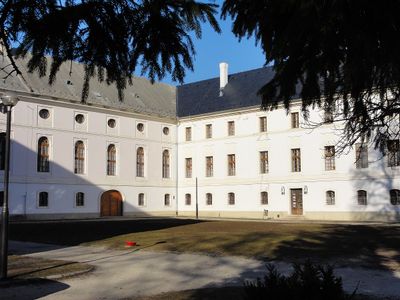
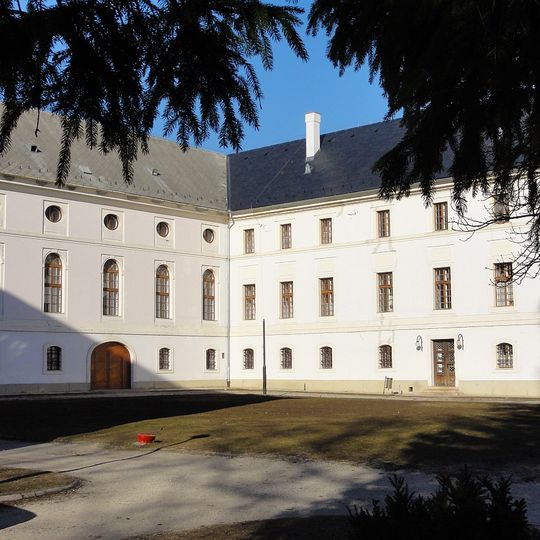
Batthyány Mansion is a free-standing, two-storey château in Bicske built in 1754–1755 to plans by József Hild, with a U-shaped plan and 64 rooms. Its main facade is arranged in a 3+10+3 axis rhythm, with slightly projecting risalits at both ends, segmental-arched ground-floor windows and large semicircular-arched windows on the upper floor. A simple iron-railed balcony on paired consoles runs in front of the third and eighth axes, and the side wings end in two-axis sections.
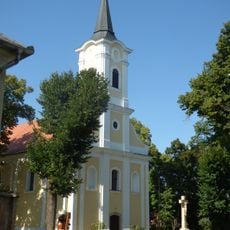
Count Lajos Batthyány, Hungary's last national palatine, had the mansion built in 1754–1755 to plans by József Hild. Archbishop József Batthyány enlarged it around 1770 and added the private chapel. Tivadar Batthyány rebuilt it between 1796 and 1799 in late Baroque and early Neoclassical style. In 1848 three successive Austrian commanders kept headquarters here, and in World War II it served as a German, then Hungarian, military hospital.
The building has housed a children's home since 1929, when Budapest's city council set up a mother-and-child protection institute here after the ministry bought it in 1928. In the ceremonial hall an institutional history exhibition shows photographs and documents from the orphanage era, and the silver goose quill and crystal inkwell of Queen Elisabeth and Franz Joseph are kept here. The west wing holds a Batthyány memorial exhibition with Lajos Batthyány's chair and cradle and paintings by Count Gyula Batthyány.
The mansion is state-owned and used free of charge by the Budapest municipal authority; the Kossuth Zsuzsa Children's Home operates in it, so the building is not a public museum. The institution-history exhibition in the ceremonial hall and the Batthyány memorial exhibition in the west wing can be viewed there. The 11-hectare castle park, a protected monument, lies around the building.
In 1921 a guest room was prepared in the east wing for Queen Zita while King Charles IV attempted to return to the throne. The royal couple never stayed: they did not want to be arrested in a Batthyány mansion if the attempt failed, linking the Habsburg and Batthyány names. The room was readied but unused.
The community of curious travelers
AroundUs brings together thousands of curated places, local tips, and hidden gems, enriched daily by 94,356 contributors worldwide.