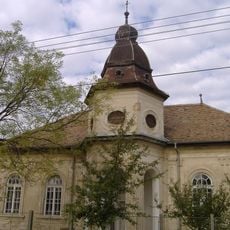
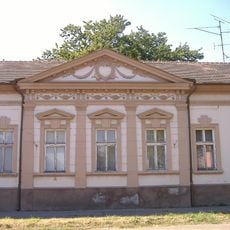
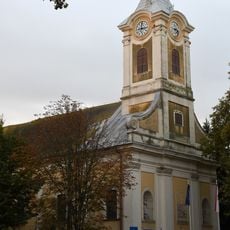
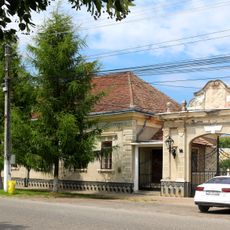
Igriș Abbey, Cistercian abbey ruins in Sânpetru Mare, Romania
Igriș Abbey is a Cistercian monastery in Sânpetru Mare whose stone walls and foundations from the 12th century remain visible today. The layout shows the typical ordered design that was common to monasteries of this religious order.
The monastery was founded in 1179 by King Béla III and served as an important religious center for centuries. After being destroyed during the Mongol invasion of 1241, it was later rebuilt and reinforced with fortifications.
The abbey's library is the oldest documented library on the territory of present-day Romania. It held works by Cicero, Seneca, Suetonius and Quintilian, alongside medieval authors such as Anselm of Canterbury and Ivo of Chartres. The Hungarian name Igriș derives from eg and res, meaning "Gate of Heaven"; popular etymology later linked it to the word agrișă (gooseberry).
The ruins lie at the Săliște (Kemenche) point, about 9 km north-west of Igriș village, partly covered by the Mureș flood embankment and the enclosure of Canton 4 of the Apele Române company. A 1.5-metre stretch of wall, large boulders and polished stones about 1 metre across survive there. The site is unmarked, so come prepared to walk over uneven ground.
Archaeological excavations in 2019 uncovered the crypt of King Andrew II, revealing that the site also served as a royal burial place. This showed it held special dynastic importance for the medieval kingdom.
The community of curious travelers
AroundUs brings together thousands of curated places, local tips, and hidden gems, enriched daily by 94,356 contributors worldwide.