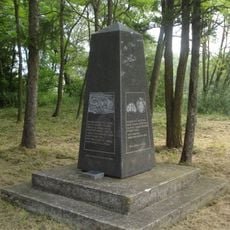
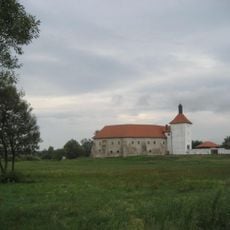
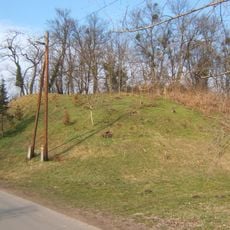
Baláta-tó, Protected lake in Somogy County, Hungary.
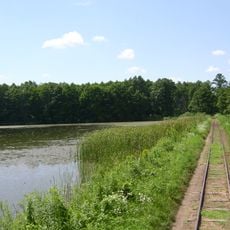
Baláta-tó is a protected bog lake and nature reserve of 174 hectares in western Somogy County, Hungary, between Kaszó, Somogycsicsó and Szenta. Its open water is small; most of the surface is sedge tussocks and reed beds, with floating bogs and alder carr. A 540-metre boardwalk opened in 2014 leads into the marsh.
The area was protected in 1942 as the first conservation site of its kind in Somogy County. This early recognition established the foundation for decades of scientific study and restoration work that followed.
The name Baláta appears in writing as early as 1295, as Balatafew, when the lake belonged to the Hungarian queen. Later owners were the Festetics family and, until 1945, Prince Christian of Hohenlohe-Oehringen, who used the forest for hunting and cut shooting lanes rather than roads. Older residents of Kaszó tell of a chimney sweep who tried to cross the bog in a dry spell in the 1930s and was never seen again.
The boardwalk named after Dr. Marián Miklós, who studied the bog's vertebrates in the 1950s, opened on 27 May 2014 and runs about 540 metres. The strictly protected core is off-limits except along the path between the narrow-gauge railway stop and the birdwatching tower, and vehicles are banned even with a permit. From 1 March to 31 July, areas where protected birds nest are closed.
The reserve's most notable plant rarity is the aquatic carnivorous aldrovanda, a bladderwort relative that traps tiny water animals in its leaf traps. Visitors also overlook the floating islands of narrow-leaved cattail and water sedge, formed when dust and fallen leaves settle on tangled roots and other plants take hold.
The community of curious travelers
AroundUs brings together thousands of curated places, local tips, and hidden gems, enriched daily by 93,617 contributors worldwide.