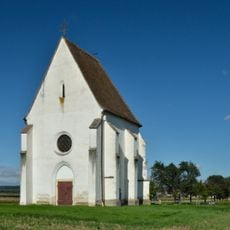
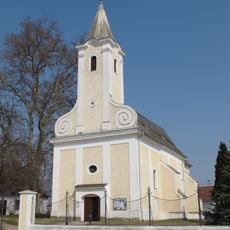
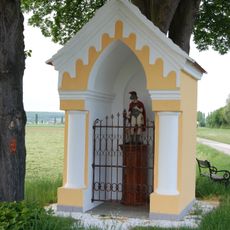
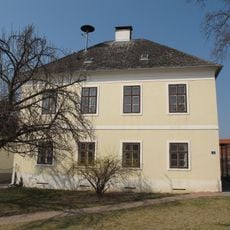
Pernau monastery, Medieval monastery in Pornóapáti, Hungary
Pernau monastery is a former Cistercian abbey whose site lies in a bend of the Pinka River at Althof near Deutsch-Schützen in Austria's Burgenland, close to the Hungarian border. Almost nothing of the buildings remains: a capital reused as a holy water basin stands in the parish church of Pornóapáti, and the ruins of Ómajor lie on the Hungarian side.
Founded in 1219 by Banus Chepan of the Ják kindred as a Benedictine house, it was incorporated into the Cistercian order in 1234 as a daughter of Szentgotthárd. In 1327 King Charles I granted the patronage to the Sitkey family, and in 1455 it passed to the mercenary captain Berthold von Ellerbach. The monks left in 1526 because of the Turkish threat; the buildings were fortified in 1552 and demolished in 1799.
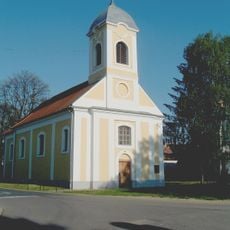
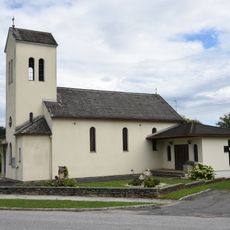
The only surviving remnant of the monastery is a carved capital kept in the parish church of Pornóapáti, where it now serves as a holy water basin. The village name itself preserves the memory: 'apáti' is Hungarian for abbot, recalling the abbas Pornensis title held by the bishop of Győr in 1609.
The monastery site lies in the Pinka valley at Deutsch-Schützen near the Althof farmstead in Austria, just across the border from Pornóapáti; the surviving capital is kept in the village parish church, while the Ómajor ruins stand on the Hungarian side. Approach on foot from the surrounding lanes.
The monastery's stone was reused: after the remaining ruins were demolished in 1799, part of the building material went into the town hall of Pornóapáti. A single carved capital also survives, now used as a holy water basin in the village parish church.
The community of curious travelers
AroundUs brings together thousands of curated places, local tips, and hidden gems, enriched daily by 93,124 contributors worldwide.