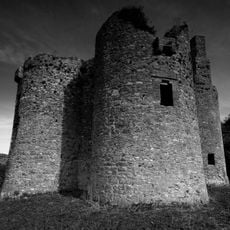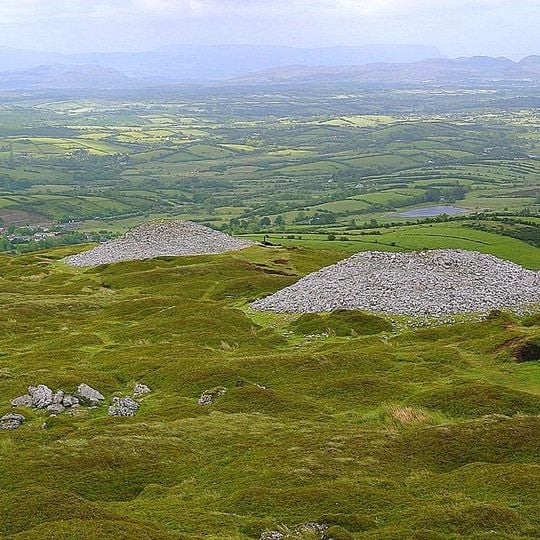
Carrowkeel, Neolithic passage tombs in County Sligo, Ireland
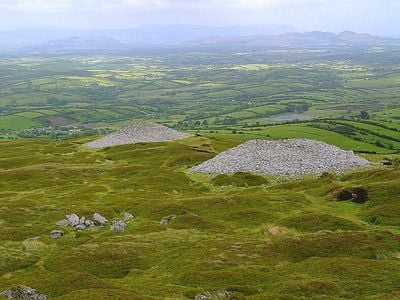
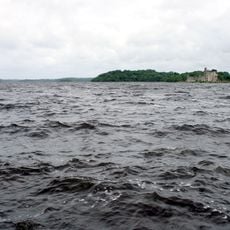
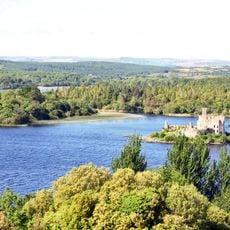
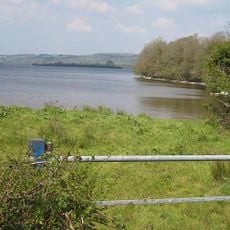
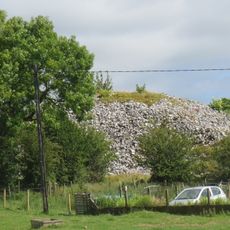
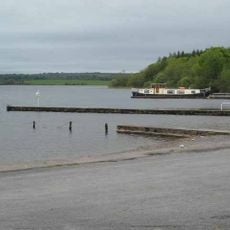
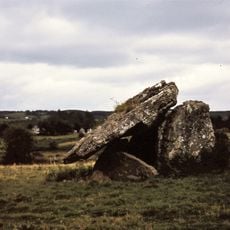
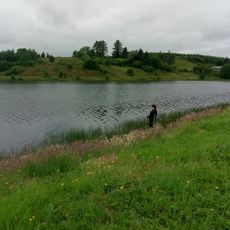
Carrowkeel Megalithic Cemetery is a group of fourteen stone passage graves built on limestone ridges overlooking Lough Arrow. The graves feature carefully shaped chambers made from limestone blocks and sit at elevations between 240 and 360 meters above sea level.
The tombs were built in the 4th millennium BC and used between about 3500 and 2500 BC. Excavations in 1911 by R.A.S. Macalister, Robert Lloyd Praeger and E.C.R. Armstrong found cremated human remains, animal bones, antler tools and pottery, including the coarse type named Carrowkeel Ware. Most of the bone assemblage was later taken to Cambridge University.
The tombs show how early farming communities buried their dead and what craft skills they had mastered. Visitors can still see the carefully shaped chambers today and understand how these people lived thousands of years ago.
The site sits on a hillside and requires sturdy footwear for uneven grass and dirt paths. Visitors should prepare for changing weather and allow plenty of time to explore all fourteen graves at a comfortable pace.
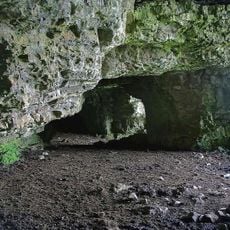
Cairn G has an roughly cross-shaped chamber, one of only two at Carrowkeel with this plan (the other is Cairn K). Its walls are built of large megaliths and the ceiling is a corbelled vault. Visitors who crawl in can see the layout, but climbing on the cairns damages them.
The community of curious travelers
AroundUs brings together thousands of curated places, local tips, and hidden gems, enriched daily by 93,176 contributors worldwide.