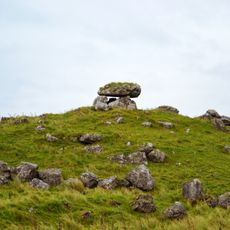
Rindoon, Archaeological site in County Roscommon, Ireland
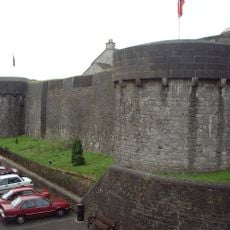
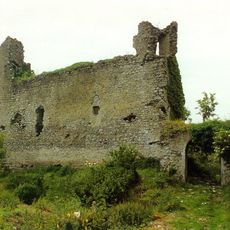
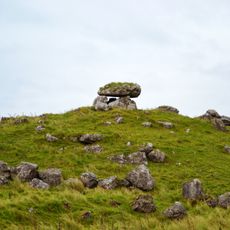
Rindoon is an abandoned medieval village on a headland jutting into Lough Ree, 4 km east of Lecarrow. Its remains lie on pasture: a castle on a low hill at the north-east end, a stone wall with gate and three towers, an anchorage, a hospital, two churches and a windmill. The street plan runs almost straight from the wall's gatehouse to the castle, with the footings of four houses in a line.
The settlement was founded between 1200 and 1250 when Geoffrey de Marisco built the castle in 1227 as an Anglo-Norman stronghold. The site lost importance as Irish clans regained control in the 1300s.
The Irish name Rinn Dúin means "fortress headland". A cross slab, two hand bells and a bronze crucifix found here are now in the National Museum of Ireland, and the bronze "Athlone plaque" from Rindoon is the best-known early Christian metalwork in Ireland. The street plan runs almost straight from the wall's gatehouse to the castle, with the foundations of four houses in a line.
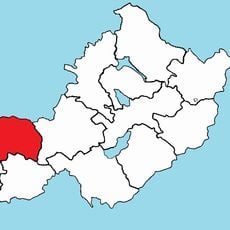
Rindoon lies on a headland on the west side of Lough Ree, 4 km east of Lecarrow in County Roscommon, between Athlone and Roscommon. The ruins stand on open pasture with no visitor facilities, so bring waterproof footwear for wet, uneven ground. The castle occupies a low hill at the north-east end of the peninsula, entered through a gatehouse on its north side; the town wall, with its gate and three towers, runs from there toward the castle.
This site preserves a rare combination of a complete medieval town with all its working parts: fortifications, houses, church, and workshops still visible in their original positions. This makes it an exceptional place to see how these communities actually functioned together.
The community of curious travelers
AroundUs brings together thousands of curated places, local tips, and hidden gems, enriched daily by 93,136 contributors worldwide.