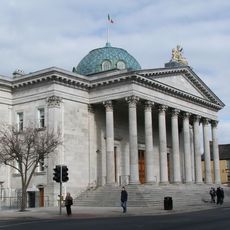
Saint Fin Barre's Cathedral, Anglican cathedral in Cork, Ireland
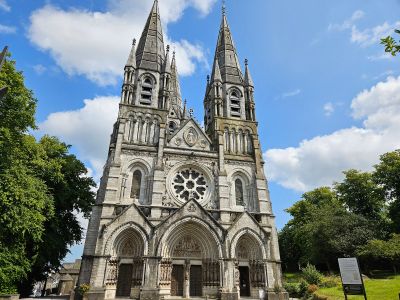
The Gothic Revival structure rises above the southern city center with three slender limestone spires, each crowned with Celtic crosses. The facade displays intricate stonework using local materials quarried from Little Island and Fermoy. The interior extends through a three-aisled nave with pointed arch arcades, while mosaic floors show geometric patterns throughout the layout.
The Church of Ireland launched a design competition in April 1862; William Burges, then 35, won it that winter and noted in his diary: "Got Cork!" The foundation stone was laid on 12 January 1865, the unfinished cathedral was consecrated in 1870 under Bishop John Gregg, and the spires were topped out in 1879. It replaced an 1735 church demolished in 1865, on a site of worship since the 7th century.
The building serves as the principal cathedral for the Church of Ireland Diocese of Cork, Cloyne and Ross, maintaining a central role in Anglican worship across Munster for centuries. The congregation maintains a strong choral tradition with weekly sung services that draw visitors from across the region and shape the liturgical life of the city.
The cathedral holds services on Sundays with Choral Eucharist at 11:15 AM and Choral Evensong at 3:30 PM, plus daily noon prayers at 12:00 PM. Visitors can explore the grounds during opening hours outside service times. Access is via Bishop Street in the southern city center, a short walk from South Main Street.
A copper angel covered in gold leaf stands on the sanctuary pinnacle, donated by the architect William Burges. Local superstition holds that the world will end if the angel ever falls from the roof. A 24-pound cannonball fired from Elizabeth Fort during the 1690 siege was found during the 1865 demolition and now hangs on a chain in the ambulatory.
The community of curious travelers
AroundUs brings together thousands of curated places, local tips, and hidden gems, enriched daily by 92,653 contributors worldwide.