Grattan Bridge, Road bridge in Dublin, Ireland
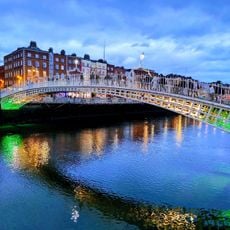
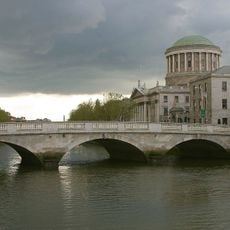
Grattan Bridge spans the River Liffey in Dublin, linking Capel Street to Parliament Street and carrying both vehicles and pedestrians across the river. It features granite-paved footpaths and functions as a central crossing for navigating the city.
The original structure at this location was Essex Bridge, built in 1676 using stone from St. Mary's Abbey. It was replaced with a new construction in 1753 after sustaining structural damage.
The bridge takes its name from Henry Grattan, an Irish parliamentarian who championed legislative independence in the late 1700s. The dedication reflects his role as a leading voice for Irish self-governance.
The crossing provides direct access to Dublin's south quays and is easy to navigate on foot. Expect busy pedestrian traffic, especially during peak hours in the city center.
Essex Bridge was the easternmost bridge on the Liffey for much of the 18th century and marked how far upriver masted ships could sail to berth at the old Custom House. The equestrian statue of George I by John van Nost the Elder, once on the bridge, was moved to the Mansion House gardens in 1798 and bought in 1937 by the Barber Institute of Fine Arts in Birmingham, where it stands today.
The community of curious travelers
AroundUs brings together thousands of curated places, local tips, and hidden gems, enriched daily by 93,095 contributors worldwide.