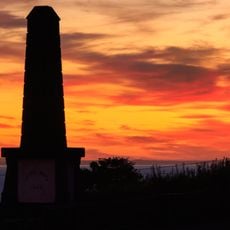
Ardmore Cathedral, 12th-century cathedral ruins in County Waterford, Ireland.
Ardmore Cathedral is an unroofed stone ruin of nave, chancel and choir, with a 12th-century nave added to a 9th-century chancel. Its nave carries Romanesque arcading with carved panels in two lunettes and a blind arcade, showing Adam and Eve, the Adoration of the Magi, the Judgment of Solomon and Archangel Michael weighing souls.
Tradition holds that Declán founded a monastery here in the 5th century, with Ultan recorded as abbot in 550. Ardmore became a cathedral in 1152 under Bishop Máel Étaín Ua Duib Ratha, suffragan to Cashel; the church was finished by 1203, when he died. The see was merged into Lismore in the 13th century, and the Irish Church Act of 1869 allocated money for preservation.
The name Ardmore comes from the Irish Ard Mór, "great height", for the hill above the sea. Pilgrims once took earth from the empty grave recess in St Declan's stone oratory, and the graveyard holds the founder's grave alongside that of Declan Hurton, killed at Thurles in December 1921 during the War of Independence.
The ruined cathedral, 30 m round tower, St Declan's Oratory and graveyard stand together near the top of a hill above Ardmore, about 400 m southwest of the village and 7.5 km east of Youghal. The ogham stones are kept in a small alcove, and the carved panels are on the west wall. The ground is uneven and unroofed, so watch your footing.
The carvings may have been inspired by pilgrimage sites such as Rome or Santiago de Compostela. Among the scenes is a bishop blessing a warrior, possibly a Crusader image or the conversion of the Déisi Muman to Christianity.
The community of curious travelers
AroundUs brings together thousands of curated places, local tips, and hidden gems, enriched daily by 93,182 contributors worldwide.