Susya, Archaeological site in Hebron Governorate, Palestine
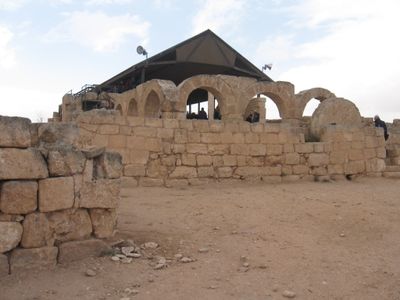
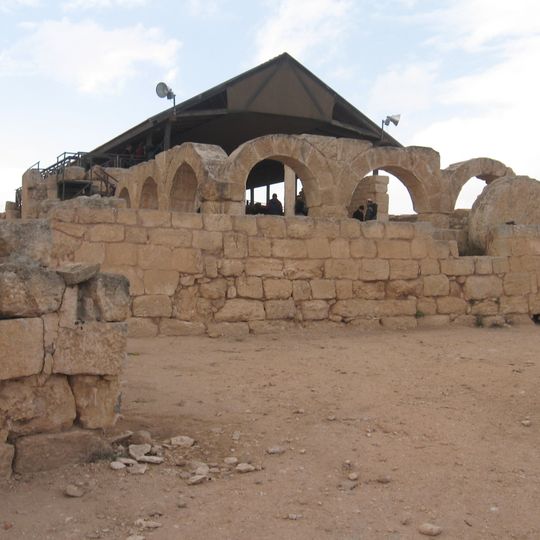
Susya is an archaeological site in the Hebron region containing ruins of an ancient settlement. The remains show residential structures, water cisterns, and terraced installations built directly into limestone hillsides across multiple historical layers.
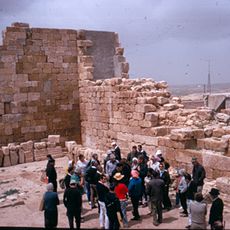
Susya was a Jewish town in the southern Hebron hills whose main occupation ran from the 3rd to the 5th century CE, with a population attested from the 4th to the 6th century. Its synagogue, excavated in 1971–72 by Shmarya Guttman, Ze'ev Yeivin and Ehud Netzer, was repurposed as a mosque after the 7th-century Muslim conquest, when a mihrab was built in its courtyard. The site was abandoned in the 8th century, resettled as a Muslim town from the 9th to the 14th century, and a Palestinian village arose nearby in the 1830s.
The Arabic name Khirbet Susiya means "Ruin of the Liquorice Plant", after the wild susiya that grows in the area; the spelling Susya follows the Hebrew name set by the Israeli Naming Committee. In the synagogue courtyard a mihrab was built after the Jewish community left around the start of the 9th century. Each year on Tisha B'Av, residents of the nearby settlement read the kinot laments in the synagogue ruins.
Visiting requires planning ahead, as the site sits in a sensitive area and must be coordinated with local authorities. It is best to visit during daylight hours and wear sturdy shoes, since the terrain is uneven and rocky.
The water system includes many cisterns and channels carved into the stone, showing how ancient residents collected rainwater in this dry region. This network was so effective that it allowed people to survive year-round.
The community of curious travelers
AroundUs brings together thousands of curated places, local tips, and hidden gems, enriched daily by 93,883 contributors worldwide.