Ancient sites in Gush Halav, Archaeological site in Galilee, Israel
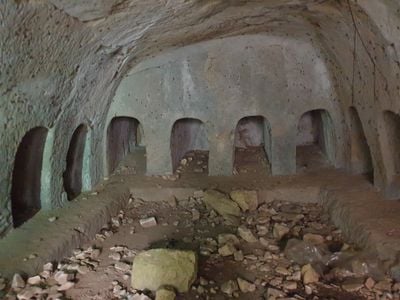
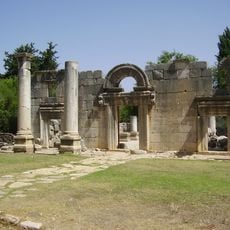
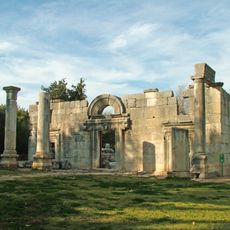
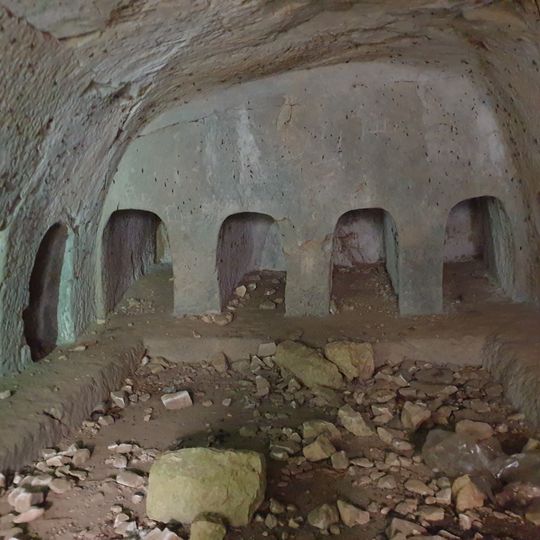
Ancient sites in Gush Halav lie on the hill of the present-day village of Jish, where the Arab village was built over the ruins of the Jewish town. The remains include a rock-cut chamber with five arched openings in its back wall, an ancient synagogue, and a Jewish cemetery with a courtyard and burial caves. A stone capital there bears a Hebrew inscription dated between the 11th and 15th centuries mentioning the Yeshivat Gaon Yaakov.
Gush Halav was the leading town of Upper Galilee and the seat of regional administration in the Mishnah and Talmud periods. Josephus, who calls it Gischala, records that in 67 CE Titus approached with a thousand horsemen; John of Gischala left by night and the townspeople opened the gates, after which the Romans breached part of the wall. It was the last Galilean town to fall in the Great Revolt. A Jewish community persisted until the 19th century, and the Arab village of Jish now stands on the ruins.
The name Gush Halav likely derives from the white limestone of the hill, though sources also link it to helev (fat) or halav (milk), suggesting the town's wealth. Jewish tradition places the tombs of Shemaya and Avtalion here, and a stone capital found at the site bears a Hebrew inscription from the 11th to 15th century naming the Yeshivat Gaon Yaakov, heir to the Sanhedrin's authority after 425 CE.
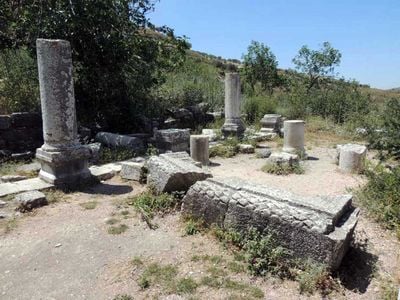
The site lies within the present-day village of Jish (Gush Halav), where the Maronite church of Mar Boutros stands on the hilltop over the old synagogue remains; visitors should ask locally before entering. The ground is dry and stony, with fallen column drums and carved blocks lying in the open, so allow time to walk between the scattered pieces.
The 1871–1878 survey of the Palestine Exploration Fund found synagogue remains on the hilltop and identified it as Gush Halav's ancient citadel; the Mar Boutros church now stands there, and villagers say synagogue stones were built into its walls. A stone capital found at the site bears a Hebrew inscription dated between the 11th and 15th centuries naming the Yeshivat Gaon Yaakov.
The community of curious travelers
AroundUs brings together thousands of curated places, local tips, and hidden gems, enriched daily by 94,069 contributors worldwide.