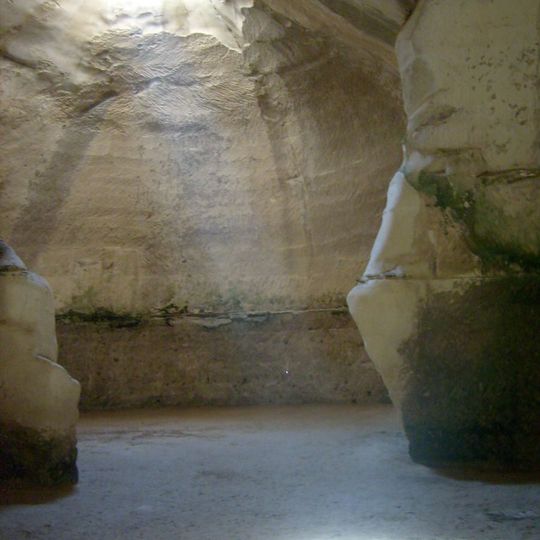
Beit Guvrin National Park, Archaeological National Park in Southern District, Israel
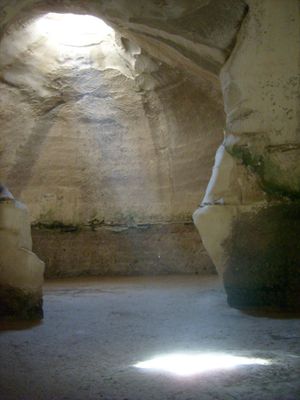
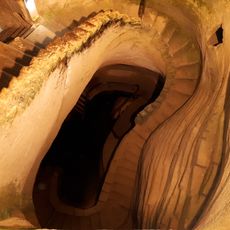
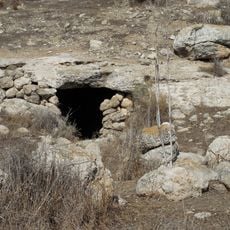
Beit Guvrin National Park is a site in southern Israel containing over 800 caves carved into limestone with varying shapes and sizes. The bell-shaped chambers reach ceiling heights of up to 18 meters (59 feet) with openings to the surface, and the ancient city of Maresha displays extensive underground systems developed during the Hellenistic period.
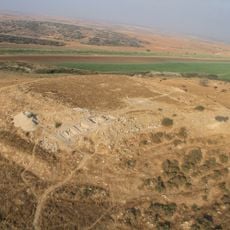
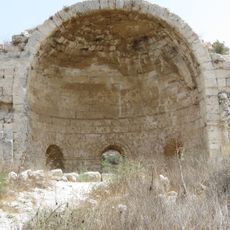
Maresha appears in the Hebrew Bible as a city of Judah, fortified by Rehoboam. After the Babylonian exile, Edomites, Sidonians and Greek speakers settled there. John Hyrcanus I captured and destroyed it in 112 BCE, and the Parthians devastated it completely in 40 BCE. Its successor, Beit Guvrin, was destroyed in the Bar Kochba revolt and renamed Eleutheropolis in 200 CE.
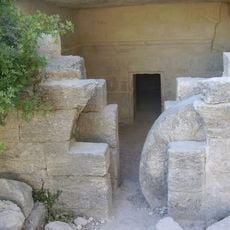
The burial caves contain detailed frescoes showing mythological figures, animals, and plants that reflect the diverse communities who lived in this region. These artworks reveal the beliefs and daily life of ancient inhabitants.
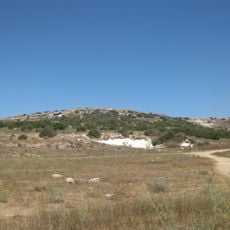
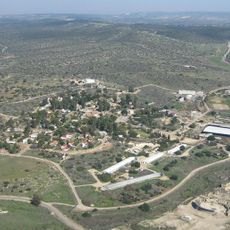
The site is divided into northern and southern sections connected by road 35, each offering separate paths for exploration. Visitors should wear sturdy shoes since many paths cross uneven ground, and the caves can remain cool even on warm days outside.
The bell caves have superb acoustics, which is why concerts are held inside them; a scene from the musical Jesus Christ Superstar was filmed there in 1973. About 80 bell-shaped caves are linked into a single system, and Polish soldiers carved "Warsaw" and "Poland" with the Polish emblem on a wall of the Polish Cave in 1943.
The community of curious travelers
AroundUs brings together thousands of curated places, local tips, and hidden gems, enriched daily by 92,696 contributors worldwide.