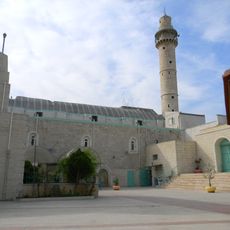
White mosque, Mosque in Ramla, Israel
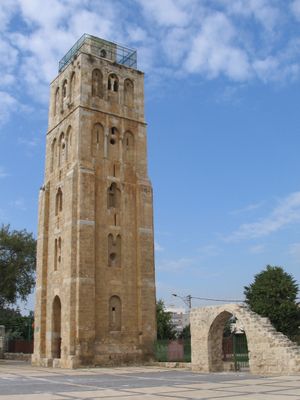
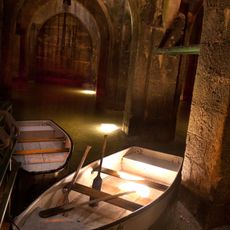
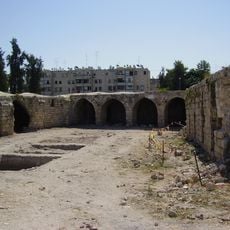
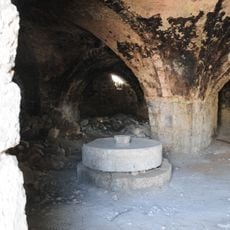
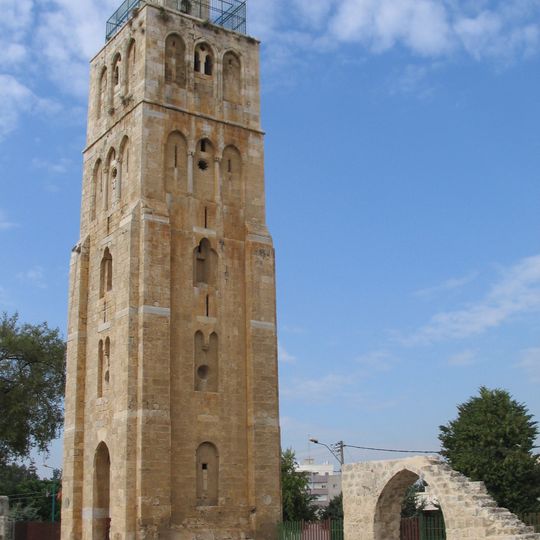
The White Mosque is a historic mosque in Ramla featuring a distinctive square minaret that rises approximately 27 meters with five stories decorated by window niches throughout. Three large underground cisterns lie beneath the central courtyard, which once supplied water to the site.
Construction began under Umayyad governor Sulayman ibn Abd al-Malik in 715–717 CE and was completed by Umar II in 720. An earthquake in January 1034 left it in ruins, and Nasir Khusraw reported it rebuilt by 1047. Saladin's architect Ilyas Ibn Abd Allah added the western side and enclosure wall in 1190, and Sultan al-Zahir Baibars added the minaret, dome, pulpit and prayer niche in 1267–1268.
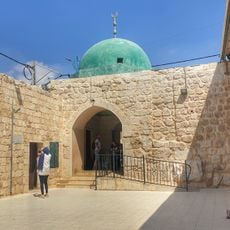
The mosque's full name, Jami Arba'in al-Mughazi, refers to the forty companions of Muhammad whom late medieval tradition held to be buried within the compound. Until the 1980s a four-day Nabi Salih festival was held beside the tower, timed six days after the Christian Holy Fire; thousands of Muslims from across the country attended a fair where Ramla's children of all faiths bought sweets. A small structure near the tower is shown by Muslims as the tomb of Nabi Salih.
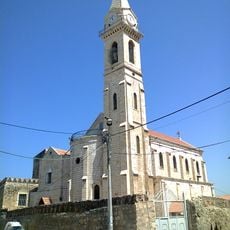
The minaret stands on the northern side of the mosque compound, and its entrance faces south. A staircase of 125 steps leads up, though only 111 are currently climbable. The top offers a view in all directions. The site is in Ramla, central Israel.
The minaret's walls are pierced by arrow slits, and a machicolation arch before its door let defenders pour boiling liquid on anyone breaking through. Cross corridors inside give quick access to every side. These features point to a military role rather than a purely religious one, and the top served as a lookout over the coastal plain.
The community of curious travelers
AroundUs brings together thousands of curated places, local tips, and hidden gems, enriched daily by 93,046 contributors worldwide.