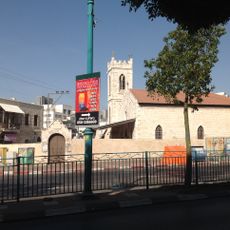
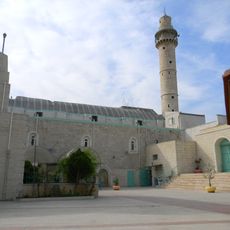
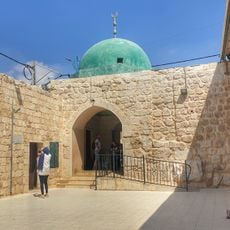
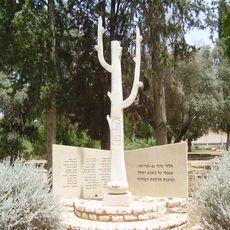
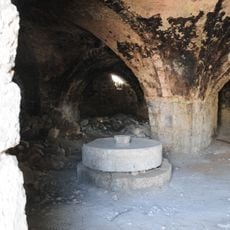
Old khan of Lod, Medieval caravanserai in Lod, Israel.
The Old Khan of Lod is a medieval caravanserai featuring open courtyards, stabling areas, and storage rooms for merchants and goods. The building shows typical features of these trading stations with thick stone walls and a practical layout of spaces.
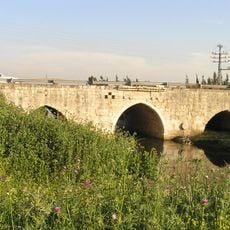
The khan likely originated in the Mamluk period, beside the postal road south of Lod's bridge. Under Ottoman rule a twice-weekly market operated here: one day for farm produce and goods, another for livestock, moved outside the built town in the 1920s. During the British Mandate the Halalta family leased the building, rented its rooms and steeped sweet lupin seeds in one room, giving the khan its name.
The name comes from the sweet lupin seeds (turmus hilu) that the Halalta family soaked in one of the rooms during the British Mandate, when they leased the building and rented out its rooms. The family's name stuck to the khan. In the Ottoman period a market was held here twice a week, one day for farm produce and consumer goods, the other for livestock.
The building is easy to reach from downtown and can be explored on foot to understand the old trading structures. The stone walls are well preserved and give a clear impression of how this location once functioned.
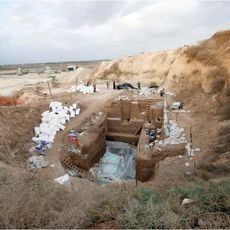
In 2007 the inner courtyard was excavated by Tel Aviv University with the Tourism Ministry and the Lod municipality. Finds were mostly Ottoman: floor remains, pottery, clay pipes from the 18th and 19th centuries, and an Ottoman gold coin from the first half of the 19th century. Mamluk and early Arab shards were probably brought in as courtyard fill.
The community of curious travelers
AroundUs brings together thousands of curated places, local tips, and hidden gems, enriched daily by 93,468 contributors worldwide.