Navon Bey House, house in Jerusalem, Israel
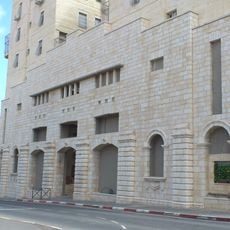
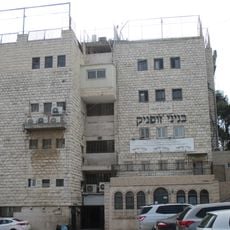
Navon Bey House is a stone building on the Street of the Prophets in Jerusalem, showing typical construction from the late 1800s with thick walls and simple windows. It has two floors above ground level and retains its original form to give visitors a sense of how people lived in earlier times.
Christian Friedrich Spittler of Basel built the house in 1869 for the Brethren missionary institution. In 1873 it passed to the Swiss banker Johannes Frutiger, who named it Mahanaim after his own name Jacob and lived there until 1885, when he sold it to Joseph Navon Bey, builder of the Jaffa–Jerusalem railway. Navon lived there until his death in 1934.
The building's name comes from Genesis 32:3, where Jacob calls the place Mahanaim; a stone inscribed MAHANAIM sits above the main entrance. Johannes Frutiger chose it from his own Hebrew name, Jacob. In Joseph Navon's day the courtyard held a family synagogue facing a marble fountain with goldfish.
Navon Bey House stands at 59 HaNevi'im Street (Street of the Prophets), behind Jaffa Road, with its symmetrical two-storey facade turned toward Jaffa Road. The building is being kept as part of the large mall project begun in 2007 on the former German Consulate plot at HaNevi'im 57, the corner of Raoul Wallenberg Street, and the Turkish Pasha's house site at HaNevi'im 61, which was to be demolished. Approach from Jaffa Road and look for the stone inscribed MAHANAIM above the main entrance.
The name Mahanaim comes from Genesis 32:3, where Jacob names the place after seeing God's camp; Johannes Frutiger chose it because his own first name was Jacob. A stone inscribed MAHANAIM is set above the main entrance. In 1885 Frutiger moved to 13 HaNevi'im Street and gave that building the same name, so this one is called the First Mahanaim House.
The community of curious travelers
AroundUs brings together thousands of curated places, local tips, and hidden gems, enriched daily by 93,663 contributors worldwide.