Tel Kudadi, Archaeological site in Tel Aviv, Israel.
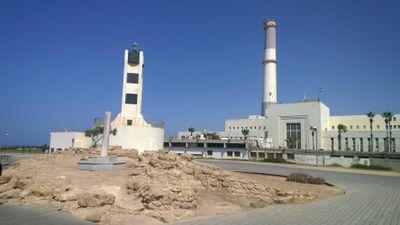
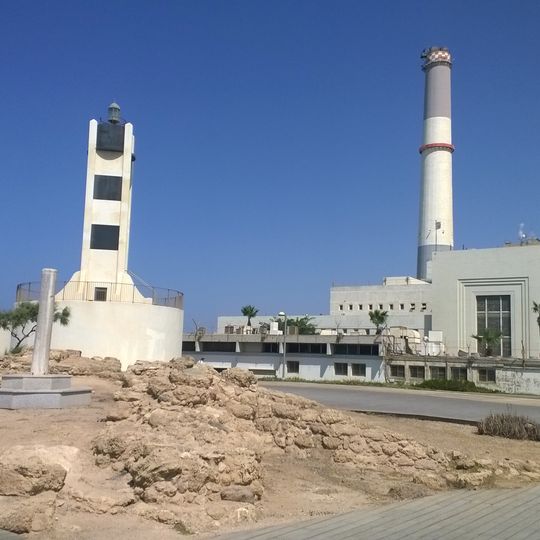
Tel Kudadi is an archaeological site in Tel Aviv containing remains of two central courtyard fortresses on a rise overlooking the Yarqon estuary. The ruins preserve evidence of military architecture and settlement patterns from multiple ancient periods.
The mound was first identified in 1934 by Jacob Ory, and P. L. O. Guy dug a trial trench in October 1937. Eleazar Sukenik and Shmuel Yeivin, helped by Nahman Avigad, excavated from November 1937 to March 1938 with funding from Pinhas Rutenberg, uncovering two Iron Age fortresses built one atop the other. Oren Tal and Alexander Fantalkin later dated the first phase to the late 8th century BCE, under Assyrian rule, and the site was abandoned before the empire withdrew in the late 7th century BCE.
The site's name preserves the Arabic Tell esh-Shuna, still used alongside the Hebrew Tell Qudadi. Finds span the Early Bronze Age, Persian, Byzantine and Early Arab periods, and the Persian-era layers show a marked Phoenician presence. Among the pottery was a Greek jar from Lesbos, the earliest of its kind found along the Mediterranean coast.
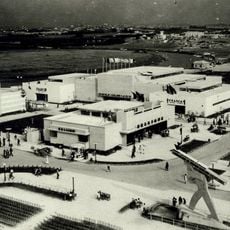
The site lies on the northern bank of the Yarkon River beside the Reading Power Station, within walking distance of the Tel Aviv Promenade. A wooden platform built during the 2007 Israel Antiquities Authority preservation project now surrounds the remains. The mound was largely flattened during construction work in the 1930s, so the fortress walls are almost invisible today.
Among the pottery found at the site was a Greek jar from the island of Lesbos, described as the earliest of its kind along the entire Mediterranean coast. The mound also served as an Ottoman military stronghold during World War I, and a British marble monument commemorating the Yarkon crossing was later set up there, its stone brought from Apollonia-Arsuf about 12 kilometres north.
The community of curious travelers
AroundUs brings together thousands of curated places, local tips, and hidden gems, enriched daily by 94,257 contributors worldwide.