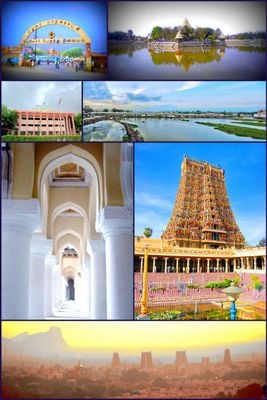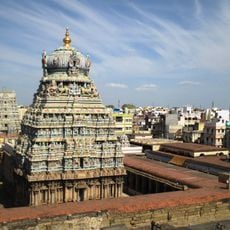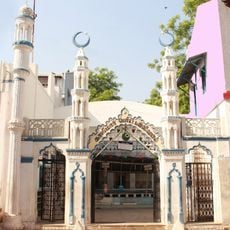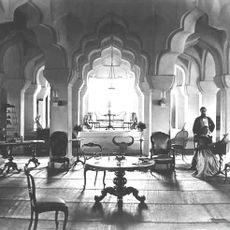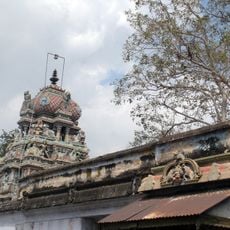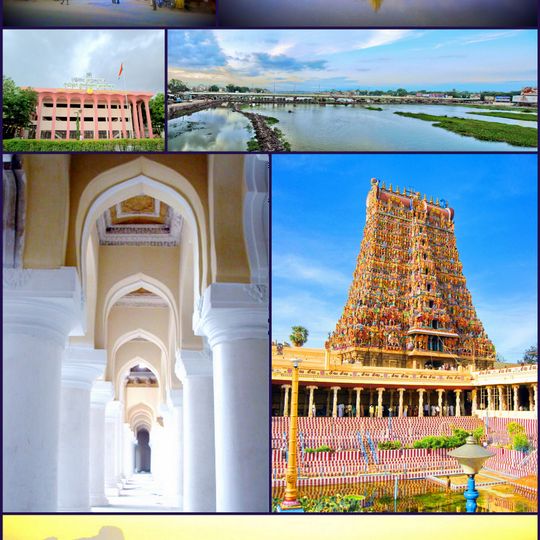
Madurai, Religious center in Tamil Nadu, India
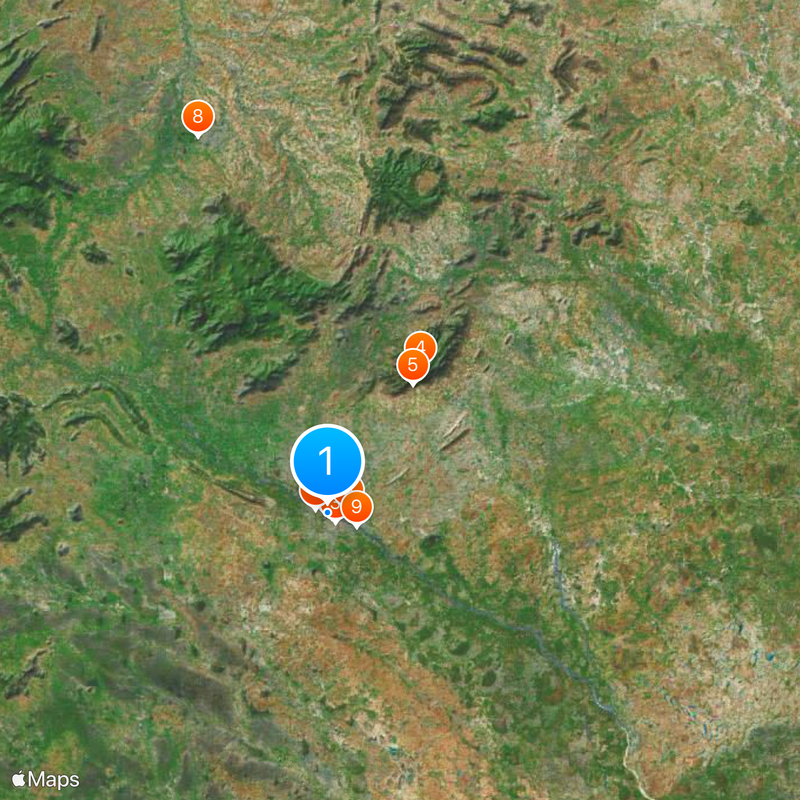
Madurai spreads along the Vaigai River and contains hundreds of temples, markets, and residential areas arranged around a central core. Narrow lanes wind through older neighborhoods and bazaars, while wider roads link the heart of the settlement with newer districts on its edges.
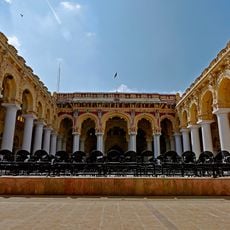
The settlement grew as a capital under the Pandya rulers from the 6th century BC and remained a seat of power for over two millennia. Successive empires reshaped its fortifications and public buildings, yet its religious importance persisted through every transition.
Daily worship and ceremonies take place throughout the city, with priests performing rituals at dawn and dusk while devotees gather in temple courtyards. During festival seasons, processions fill the streets with music, flower offerings, and traditional chanting that continues late into the evening.
An international airport links the settlement with other regions, while road and rail routes provide access to neighboring areas across the south. Visitors can rely on buses, auto-rickshaws, and taxis to move between neighborhoods and reach major sites.
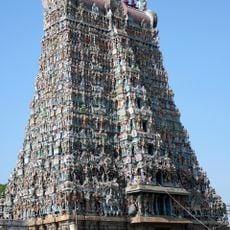
The settlement takes its name from the honey that legend says dripped from the hair of a deity onto its soil. Four main streets radiate from the central temple complex in cardinal directions, creating a layout that pilgrims have followed for centuries.
The community of curious travelers
AroundUs brings together thousands of curated places, local tips, and hidden gems, enriched daily by 91,402 contributors worldwide.