Thirumalai Nayakkar Mahal, 17th-century palace in Madurai, India
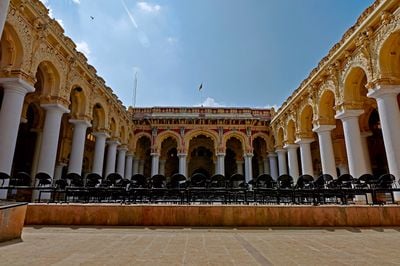
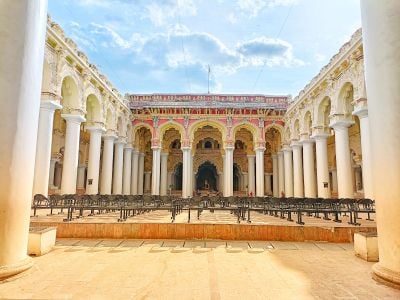
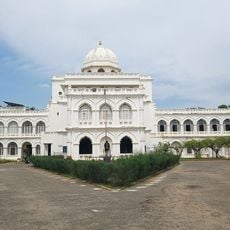
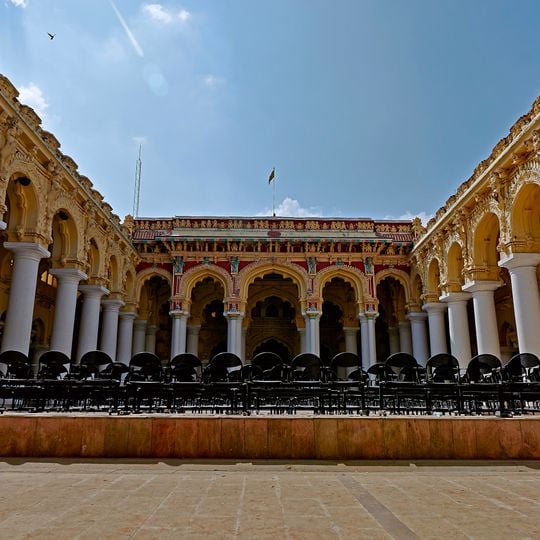
Thirumalai Nayakkar Mahal is a 17th-century palace in Madurai, India, known for its towering columns and wide courtyards. The complex combines elements of Dravidian and Islamic architecture and spreads across several interconnected sections.
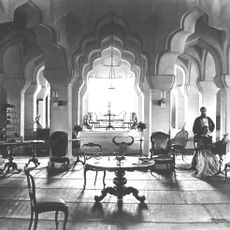
Tirumala Nayaka, ruler of Madurai from 1623 to 1659, built the palace as the focal point of his capital, and it was completed in 1636. Local legend credits an Italian architect, but art historians classify the building as late Nayaka-style Vijayanagara architecture. After war damage, the British used it as barracks and a weaving and paper factory, and it served as the district court until 1970.
The name honors the king who commissioned the building and connects to the legacy of the Nayak rulers in this region. Visitors can walk through the tall columned halls and experience the open courtyard, which today hosts events and ceremonies.
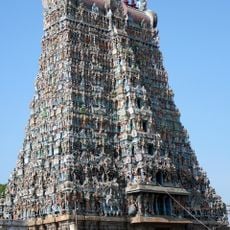
The palace lies about 2 km southeast of the Meenakshi Amman Temple in central Madurai. Visitors can reach the entrance gate, the main hall and the dance hall; the courtyard and dancing hall are the main attractions. A light and sound show on the Silappathikaram story runs in the evening, in English and then in Tamil.
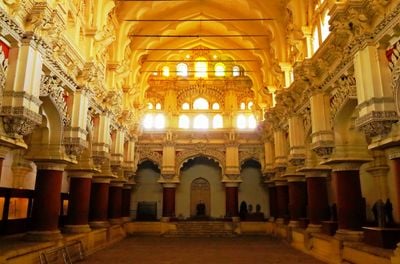
The Swarga Vilasam, the throne room, is an octagonal arcaded structure under a dome 60 to 70 feet high, carried on stone ribs and massive circular columns linked by pointed, scalloped arches. A gallery opens into the nave above the side aisles. The courtyard it faces measures about 75 by 50 metres.
The community of curious travelers
AroundUs brings together thousands of curated places, local tips, and hidden gems, enriched daily by 92,746 contributors worldwide.