Eran, Archaeological site in Sagar district, India.
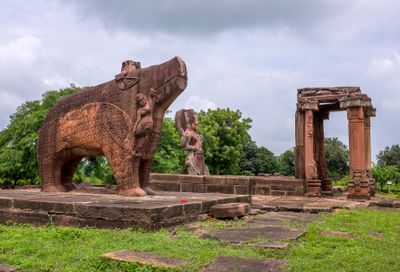
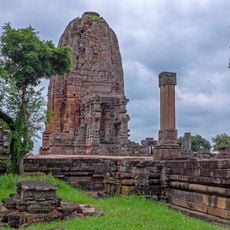
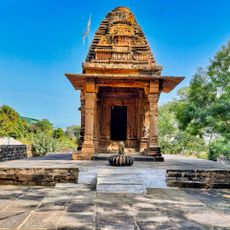
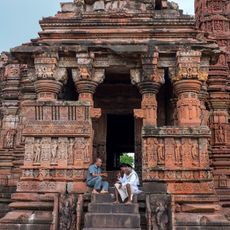
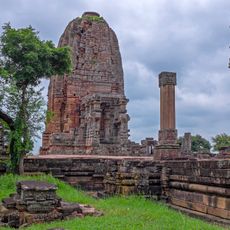
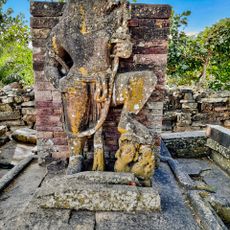
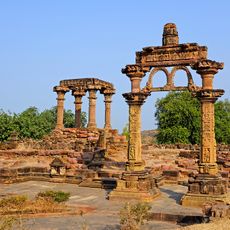
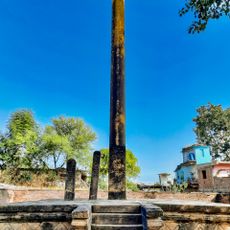
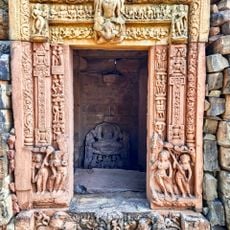
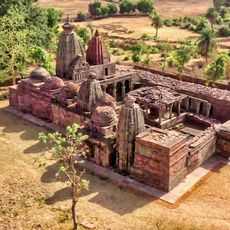
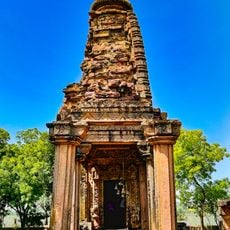
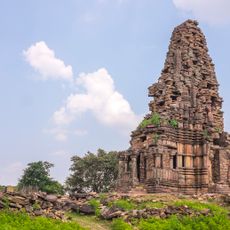
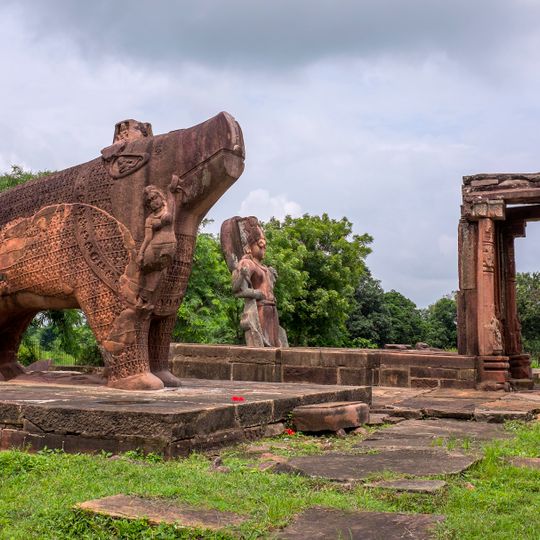
Eran is an archaeological site on the south bank of the Bina River in Sagar district. Its centrepiece is a colossal red sandstone boar, the Varaha avatar of Vishnu, carved with sages and scholars across its body; nearby stand a 13-metre Garuda pillar and the ruins of Gupta-era temples.
Eran was the capital of Airikina Vishaya, a division of the Gupta Empire, and its inscriptions help date Gupta history. The Bhanugupta inscription of 510 CE records the first epigraphic evidence of sati, when Goparaja's widow immolated herself. The 13 m Garuda pillar was dedicated in 484/485 CE (Gupta year 165) by Matrivishnu and Dhanyavishnu. After the Gupta period the town declined, possibly destroyed by the Hunas.
The name Eran comes from erakā, the elephant cattail grass that still grows here. The Bhanugupta inscription of 510 CE records the first epigraphic evidence of sati, when Goparaja's widow was immolated. The Garuda pillar, raised by Matrivishnu and Dhanyavishnu, faces the temples on one side and the town on the other.
The site lies about 80 kilometers north of Sagar city and is accessible by road. Accommodation and food options are available in Sagar for visitors planning to explore the area.
The site was one of ancient India's mints: over 3,000 coins dated between 300 BCE and 100 CE were found here, bearing horses, elephants, bulls, lotus flowers, swastikas and Buddhist symbols. One coin stamped with the name Dharmapala in Brahmi script, assigned to the late 3rd century BCE, is held in the British Museum.
The community of curious travelers
AroundUs brings together thousands of curated places, local tips, and hidden gems, enriched daily by 92,643 contributors worldwide.