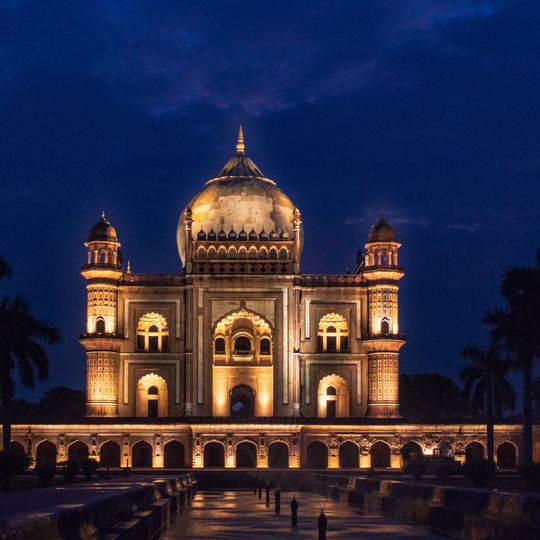
Tomb of Safdar Jang, Mughal mausoleum in New Delhi, India
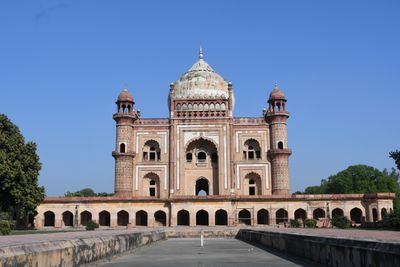
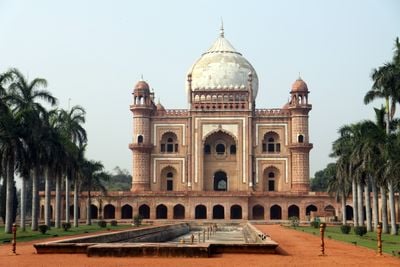
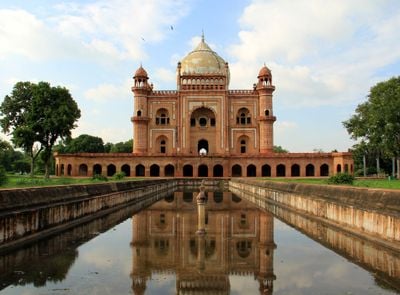
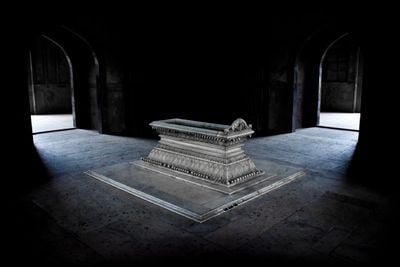
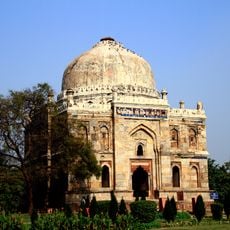
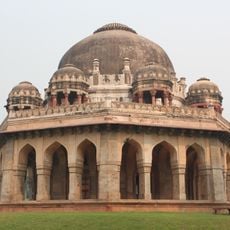
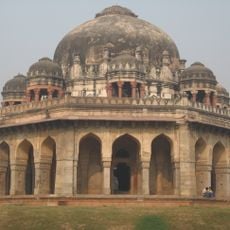
The Tomb of Safdar Jang is a large rectangular structure topped with a central dome and anchored by four corner towers, with detailed stonework in sandstone and marble across its exterior. The building sits within a garden layout featuring pathways and water channels that divide the grounds into balanced sections.
Built in 1754, the tomb serves as the burial place of Safdar Jang, who held the position of Prime Minister under Emperor Ahmad Shah Bahadur. The structure was completed shortly after his death during a period when Mughal power was beginning to shift and change.
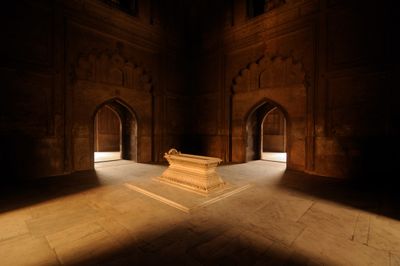
The mausoleum blends Persian and Indian architectural styles in ways you can see throughout the stonework and spatial design. As you walk through the eight chambers surrounding the central burial space, the influence of both traditions becomes clear in every detail.
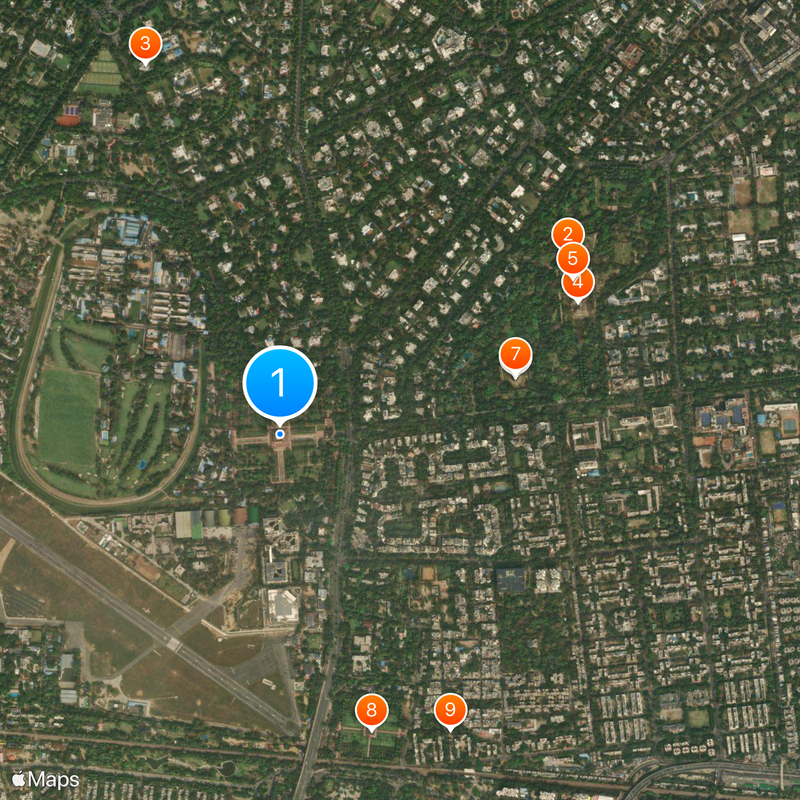
The monument sits on Aurobindo Marg and welcomes visitors from sunrise to sunset each day. Wear comfortable walking shoes since exploring the grounds and climbing to different levels requires considerable movement around the site.
The complex follows a nine-part floor plan, a rarer choice in Mughal architecture that emphasizes mathematical harmony. The water channels and basins are arranged specifically to transform the entire grounds into a balanced pattern that becomes visible as you move through the space.
The community of curious travelers
AroundUs brings together thousands of curated places, local tips, and hidden gems, enriched daily by 60,000 contributors worldwide.