Akola Fort, Stone fort in Akola district, India
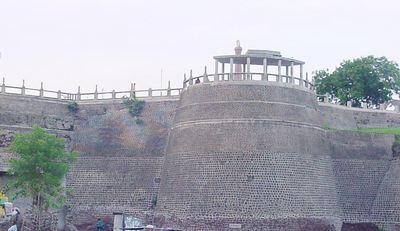
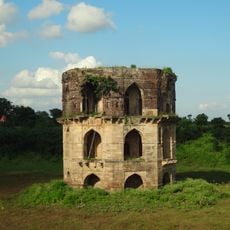
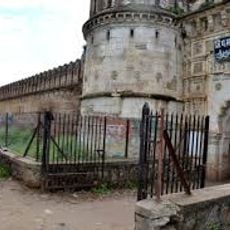
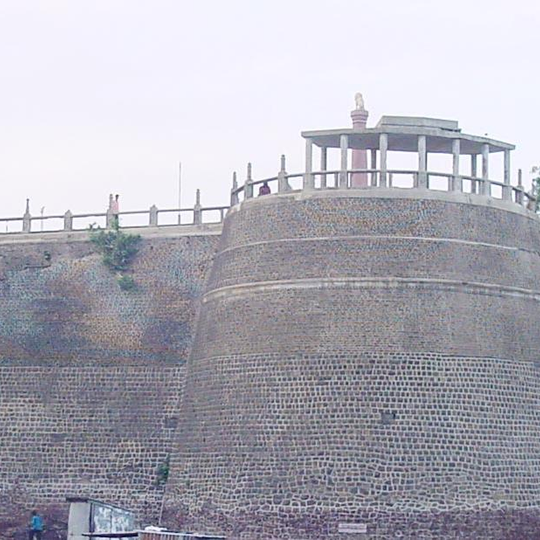
Akola Fort, also called Asadgad, is a defensive rampart rather than a full fort, with a massive wall of small grey and brown stone blocks rising from a broad base. A large rounded bastion with faint horizontal banding dominates the right side, topped by a crenellated parapet on evenly spaced pillars and a small domed finial. Of its three original bastions, Asad Buruj and Fateh Buruj remain.
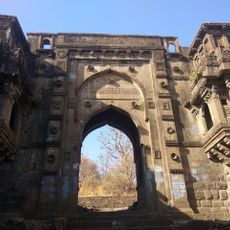
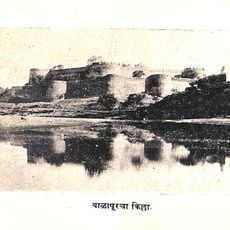
A Marathi inscription on the Agarves gate credits Govind Appaji with building the fort in 780 AD to protect the nearby Raj Rajeshwar Shiva temple. Asad Khan attacked and rebuilt it in 1697 under Aurangzeb, renaming it Asadgadh; an Eidgah inscription records completion by Khawja Abdul Latif in 1698. Arthur Wellesley camped here in 1803 before the Battle of Argaon, and the British dismantled the fort around 1870.
The fort is also called Asadgad, after Nawab Asad Khan, the minister under Aurangzeb who had Korbandh rebuilt in 1697. In the Shravan month, devotees carry water from distant rivers to pour on the Raj Rajeshwar Shiva linga in the nearby temple, whose cracked stone is linked to a local legend about Raja Akolsingh's queen.
You can visit the fort throughout the year and explore its stone walls and towers at your own pace. Hiring a local guide helps you understand the layout and navigate the site more easily.
The fort is not a full fort but a protective rampart: of its three bastions, Asad Buruj and Fateh (Panch) Buruj survive, and of four gates, Dahi Handa and Agarves remain. A half-ruined building on Asad Buruj, called the Hawamahal, is said to have housed Asad Khan.
The community of curious travelers
AroundUs brings together thousands of curated places, local tips, and hidden gems, enriched daily by 94,045 contributors worldwide.