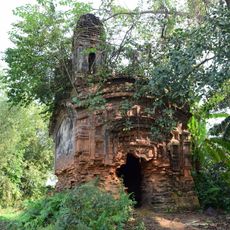
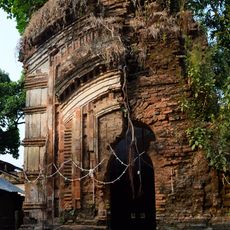
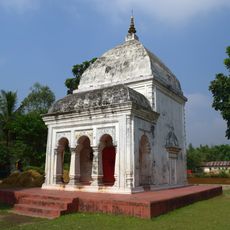
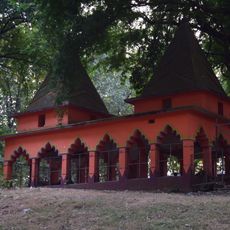
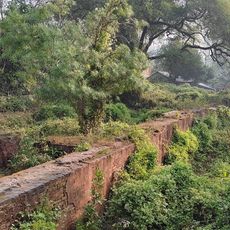
Bangarh, Archaeological site in Gangarampur, India
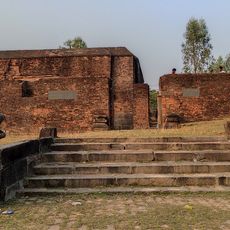
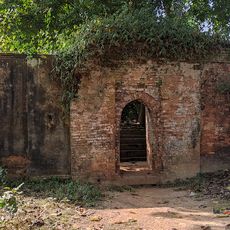
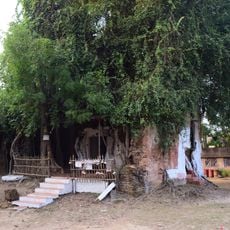
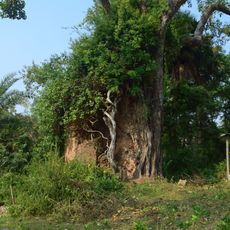
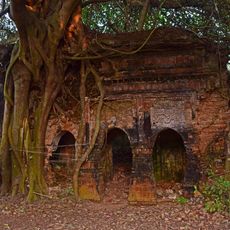
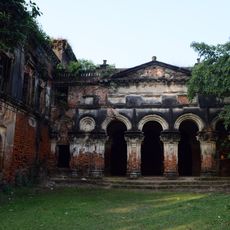
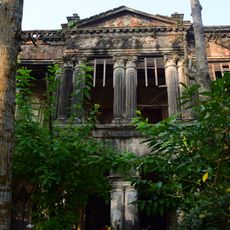
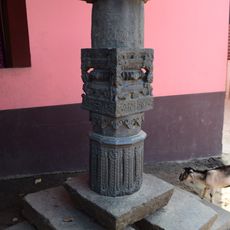
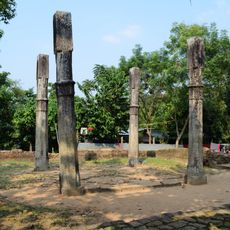
Bangarh is the ruined ancient city of Kotivarsha, on the east bank of the Punarbhaba River. Its main mound measures about 549 by 457 metres, aligned with the river, and was bounded by a moat on the west, south and east and by rampart walls on all four sides. Low courses of reddish-brown brick, some joined into stretches and others isolated, stand on flat grass.
Kotivarsha became a substantial town in the Shunga period, around the 2nd–1st centuries BCE, when it was enclosed by a burnt-brick wall with brick houses and drains. Under the Guptas it was the capital of a vishaya in Pundravardhana province, administered by a mayor and a board of merchant, artisan and administrator, as recorded in Damodarpur copper plates dated 444–543 CE. It remained a district capital into the 1590s, and Muhammad Bakhtiyar Khalji died at Devkot around 1205–06.
The site carries different names across various periods, documented in ancient texts that describe the settlement. These names show how travelers and scholars referred to this place over many centuries.
The ruins lie on the eastern bank of the Punarbhaba River, about 29 km south of Dinajpur and within Gangarampur town in Dakshin Dinajpur district. The main mound is roughly rectangular, about 549 by 457 m, with its longer side running northeast to southwest parallel to the river. A moat borders it on the west, south and east, and rampart walls once enclosed all four sides.
Ancient texts such as Brihat Samhita and Vayu Purana mention this location under different names from various time periods. These historical references show that scholars and writers documented this settlement site across a long span of time.
The community of curious travelers
AroundUs brings together thousands of curated places, local tips, and hidden gems, enriched daily by 94,419 contributors worldwide.