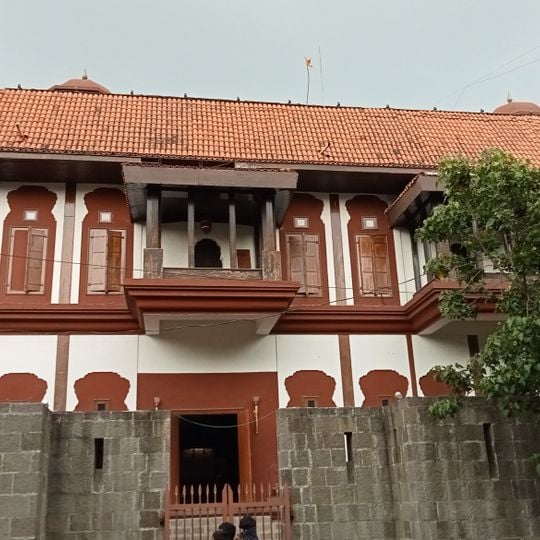
Lal Mahal, Palace in Kasba Peth, Pune, India
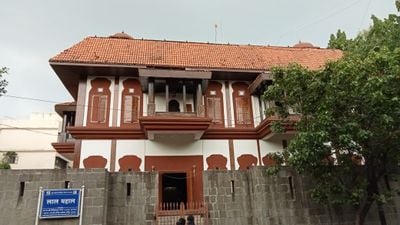
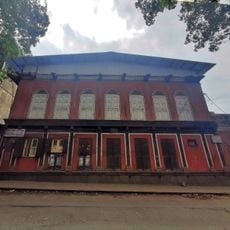
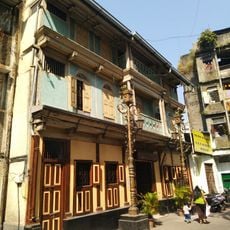
Lal Mahal is a two-storey reconstruction in Kasba Peth, Pune, built by the Pune Municipal Corporation between 1984 and 1988 on part of the original palace's land. Its upper facade is white with red-brown painted borders around six recessed windows with closed brown shutters, and a central balcony projects forward on brown posts. Below, a red-brown band with white decorative shapes runs above a dark central doorway behind a low metal gate, and the building stands on a rough grey stone base wall with square openings.
Dadoji Kondadeo built Lal Mahal around 1630 in the Pune jagir, with permission from Shahaji, then serving the Ahmadnagar Sultanate, to revive the razed city and raise Shahaji's son Shivaji. Shivaji lived here with his mother Jijabai until he took Torna fort in 1645, and married Saibai here on 16 May 1640. In 1663 he raided the palace, then occupied by Mughal commander Shaista Khan, cutting off four of his fingers as he fled through a first-floor window. Ruined by the end of the 17th century, it was rebuilt by the Pune Municipal Corporation between 1984 and 1988.
The name Lal Mahal means 'red palace', though the present building shows white upper walls with red-brown borders and a red-brown band, not bright red walls. Inside, large oil paintings depict events from Shivaji's life, and a carving shows him using a gold plow with Jijabai, recalling the tale of land being plowed with a golden ploughshare.
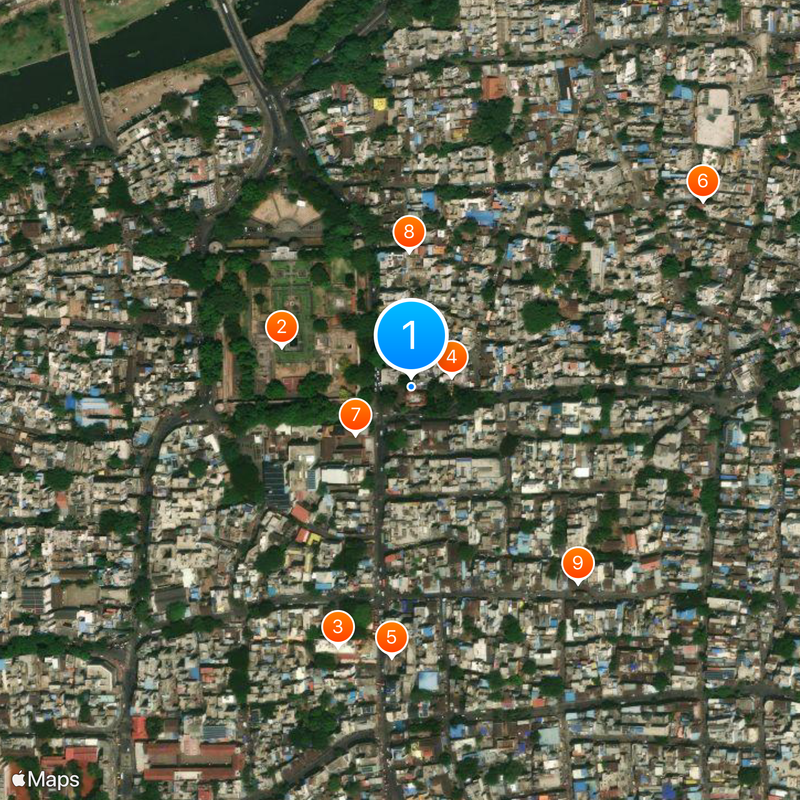
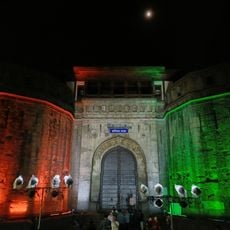
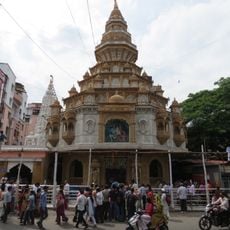
The reconstruction stands inside Jijamata Garden in Kasba Peth, next to Shaniwar Wada and the Kasba Ganapati temple, so it is easily combined with both. The memorial occupies only part of the original palace land, and the garden around it serves as a children's recreation area. The building has two levels, with the exhibits on the upper floor reached from the garden.
The present building is a 1984-1988 reconstruction by the Pune Municipal Corporation, raised on only part of the original palace land; the exact site of the 1630 Lal Mahal is unknown, though it stood near Shaniwarwada. A detailed statue of builder Dadoji Kondadeo, installed at reconstruction, was uprooted in 2010 and moved to a municipal garden, so no memorial to him remains on-site.
The community of curious travelers
AroundUs brings together thousands of curated places, local tips, and hidden gems, enriched daily by 94,645 contributors worldwide.