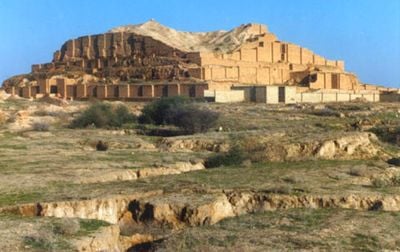
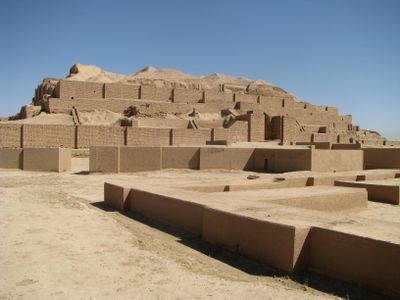
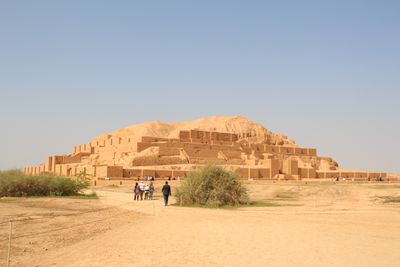
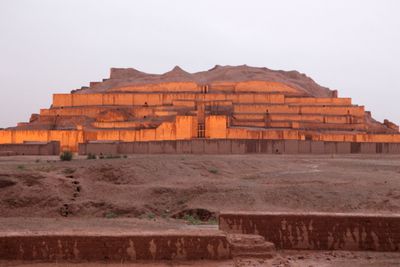
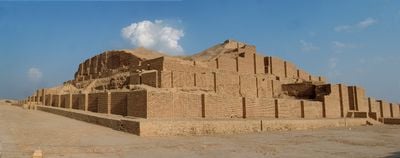
Chogha Zanbil, Ancient Elamite complex in Khuzestan Province, Iran.
Chogha Zanbil is an ancient Elamite complex in Khuzestan Province, Iran, built around a multi-tiered temple tower made of mud brick. The central tower is surrounded by three concentric rings of walls that enclose additional temples and administrative buildings.
King Untash-Napirisha founded the complex in the 13th century BC as a religious center for his kingdom. Assyrian troops under Ashurbanipal destroyed the city in the 7th century BC, leaving only the foundations behind.
The name means "basket mound" in the local language, referring to the shape travelers saw when the structure was buried under earth for centuries. Today visitors walk among walls that once enclosed sacred courtyards where priests performed daily rituals.
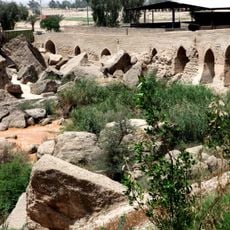
The site lies about 30 kilometers southeast of Susa in flat countryside, clearly visible from the main road. Visitors can walk the lower levels and move between the remains of outer walls, while upper sections are viewable only from a distance.
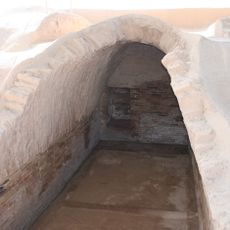
Five underground vaulted tombs lie within the complex, showing different burial customs practiced by the Elamites. Some chambers held cremated remains while another contained an unburned body.
The community of curious travelers
AroundUs brings together thousands of curated places, local tips, and hidden gems, enriched daily by 92,637 contributors worldwide.