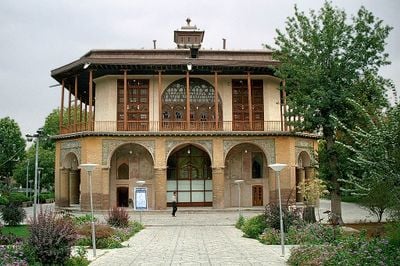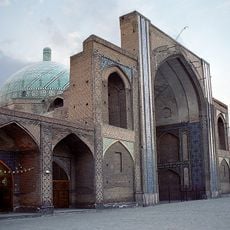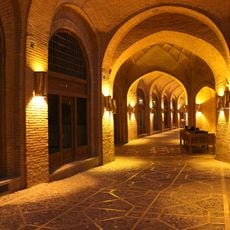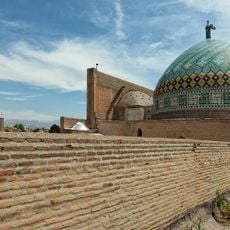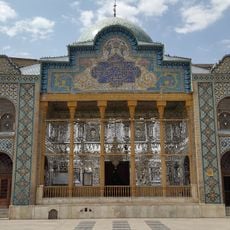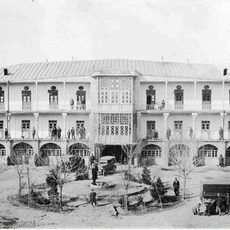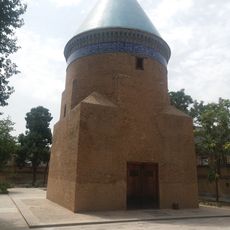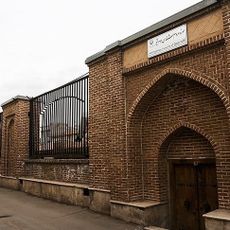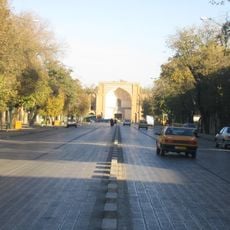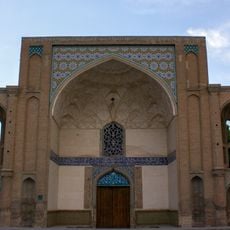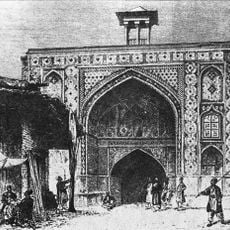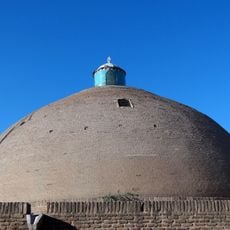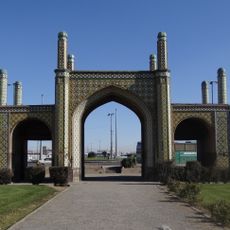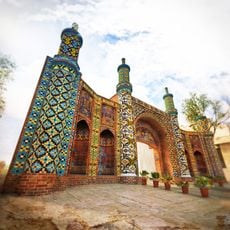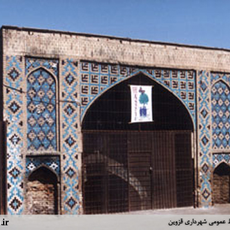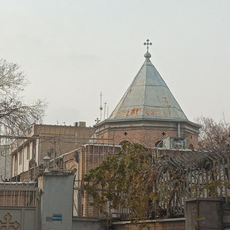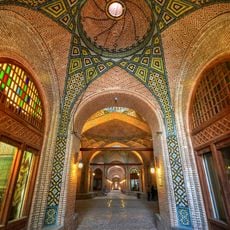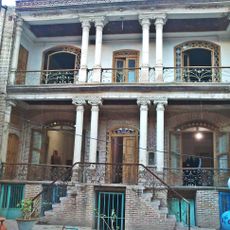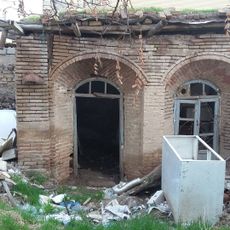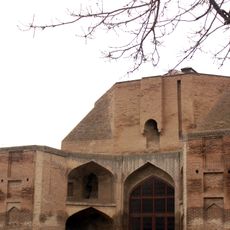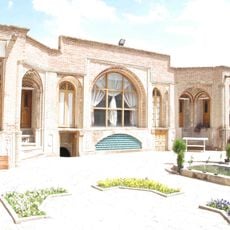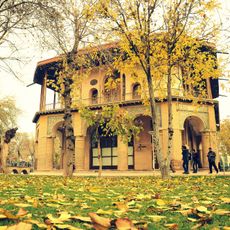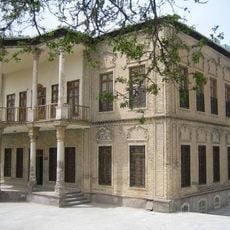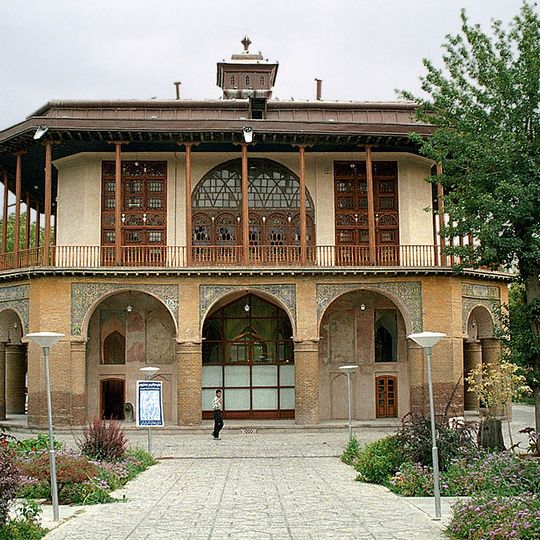
Chehel Sotun, Royal pavilion in Qazvin, Iran.
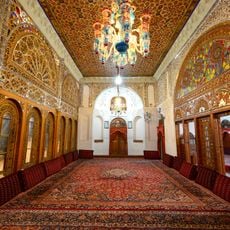
Chehel Sotun is a two-story pavilion set within the Sa'adat Abad Garden complex, built with wooden columns, brick walls, and plaster decorations. The structure features a thoughtful arrangement of openings and verandas that display traditional Persian craftsmanship throughout its design.
Shah Tahmasp I commissioned the pavilion in 1557 when he moved the capital from Tabriz to Qazvin during the Safavid era. This construction marked an important phase for Persian architecture as the city became the new seat of royal power.
The structure blends architectural styles from two distinct eras, revealing how Persian royal tastes evolved over generations. Visitors can observe how decorative techniques and spatial design shifted between these periods.
The pavilion now operates as a calligraphy museum where visitors explore Persian artistic traditions through rotating exhibitions and displays. Morning visits work best since the spaces remain less crowded and natural light illuminates the decorative details.
Construction methods using brick, plaster, and wood reflect techniques established in Persian building traditions since the 16th century. These materials proved durable enough to allow the pavilion to remain standing and functional through centuries of use.
The community of curious travelers
AroundUs brings together thousands of curated places, local tips, and hidden gems, enriched daily by 60,000 contributors worldwide.