Cascata delle Marmore, Ancient Roman waterfall in Terni, Italy
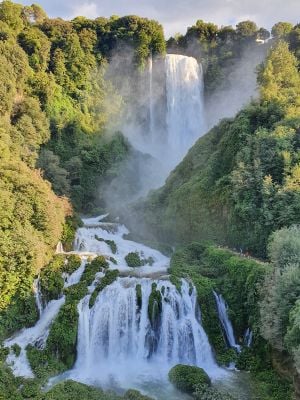
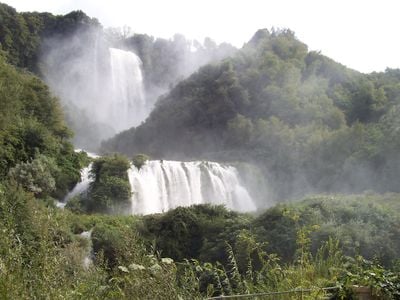
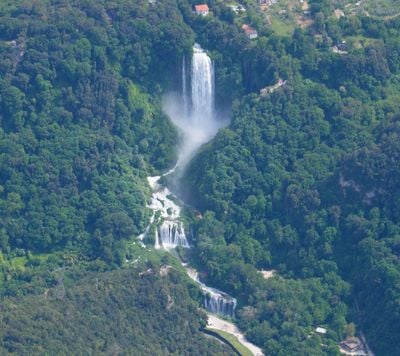
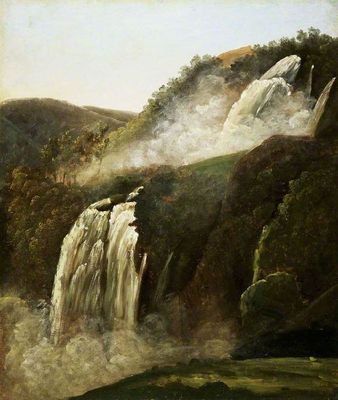
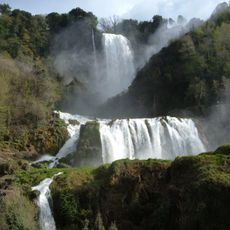
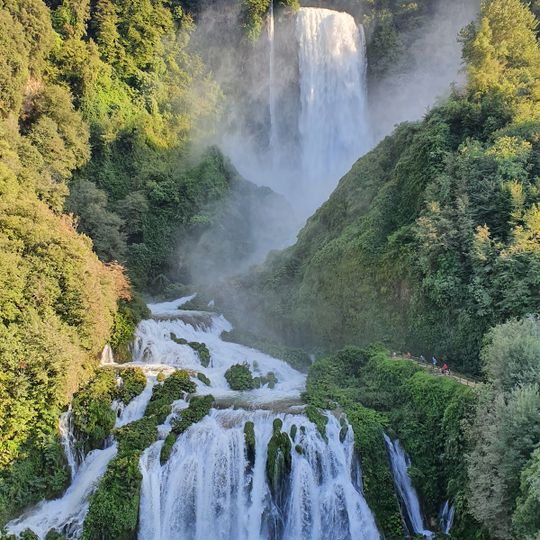
Cascata delle Marmore is a waterfall in Terni, Italy, created through a system of Roman canals that directs the Velino River over three drops totaling 165 meters (541 feet) into the Nera River below. The water is controlled by modern gates, so the full flow becomes visible only at scheduled times.
Roman consul Manius Curius Dentatus ordered a canal dug in 271 BC to divert the Velino and drain marshes that caused disease. Later engineers expanded the canal system over the centuries, and eventually the water was harnessed for power generation as well.
The Latin name refers to the white limestone deposits that have formed on the rock faces over centuries, giving the falling water a milky appearance. Visitors follow several walking paths that lead to different viewpoints, allowing direct contact with the spray.
Opening times for the full water flow change with the season, so visitors should check daily schedules in advance before traveling. Several walking paths lead to upper and lower viewpoints, with sturdy footwear advisable due to wet surfaces and stairs.
The flowing water creates rainbows in the spray when sunlight hits it, drawing photographers at certain times of day. The gates open with a clearly audible signal, allowing visitors to watch the sudden surge in flow.
Location: Terni
Elevation above the sea: 326 m
Height: 1 m
Part of: Velino
Website: https://cascatadellemarmore.info
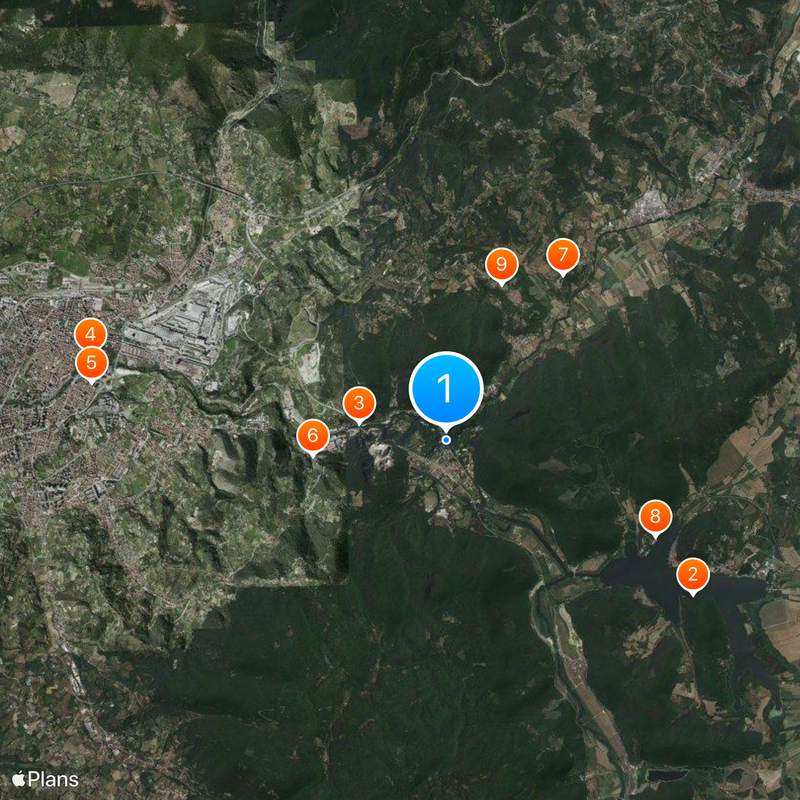
GPS coordinates: 42.55116,12.71525
Latest update: December 4, 2025 19:01
Waterfalls have a way of drawing people in. The sound of falling water, the mist that rises from the base, the way light catches the spray. Some of the most striking examples sit in places that remain relatively quiet, where the journey itself becomes part of the experience. These destinations reward travelers who make the effort, offering moments of solitude that are increasingly rare around natural landmarks. This collection includes places like the limestone terraces of Plitvice Lakes in Croatia, where a chain of interconnected pools spills from one to the next through forest shade. Or the red sandstone walls of Coyote Gulch in Utah, where water carved out hidden alcoves and pools over countless seasons. In India, Nohkalikai Falls drops from a forested plateau into a green pool far below. China's Huangguoshu Waterfall has a cave tucked behind the curtain of water itself. At the Vietnam-China border, Ban Gioc-Detian spreads wide across the landscape, while Angel Falls in Venezuela tumbles nearly a thousand meters from a flat topped mountain. Norway's Geirangerfjord hosts the Seven Sisters, a cluster of parallel streams that flow straight into the fjord. Iceland's Dettifoss sends an immense volume of glacial water over black volcanic rock. South Africa's Tugela Falls descends in stages from the dramatic cliff face of the Drakensberg range. And in the Philippines, Kawasan Falls creates a series of turquoise pools beneath a canopy of tropical growth. Each place has its own character, shaped by the rock, the climate, and the surrounding terrain.
Umbria preserves traces of over two millennia of history through its archaeological sites, religious monuments, and remarkable natural formations. The region features underground complexes such as Orvieto Underground with its 1,200 passages carved into volcanic tuff, and Narni Underground, revealing medieval chapels and remains of Roman aqueducts. Visitors also explore the Dunarobba Fossil Forest, where 50 petrified tree trunks dating back three million years showcase the region's geological evolution. Medieval castles like Rocca Albornoziana overlook ancient towns, while monasteries such as San Pietro in Valle and Eremo delle Carceri maintain medieval art and spirituality. The Umbrian landscape stretches from Gubbio's Roman theaters to mountain villages like Castelluccio, perched at 1,452 meters (4,764 feet) above sea level, and includes the Nera Natural Park, which protects over 2,120 hectares (5,243 acres) of forests and limestone formations. These sites trace the region’s history from the Etruscan civilization through the Renaissance.
Lago di Piediluco
4.2 km
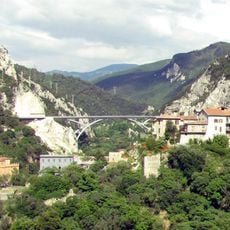
Marmore bridge
1.3 km
Museo archeologico di Terni
5.2 km
Teatro Sergio Secci
5.1 km
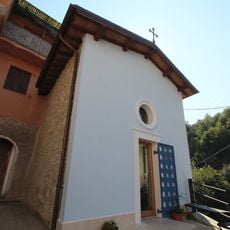
Nostra Signora di Lourdes
1.9 km
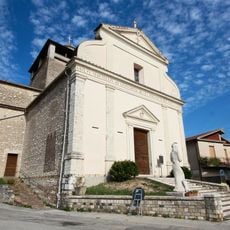
Santa Maria Assunta
2.9 km
Chiringuito - Società Canottieri Piediluco
3.3 km
Santissima Trinità
2.4 km
Santa Maria Annunziata e San Brizio
2 km
San Valentino
4.7 km
San Rocco
2.4 km
Santissima Trinità
3.1 km
San Liberatore
3.1 km
Convent of San Francesco
3.7 km
Sacro Cuore Immacolato di Maria nuova
3.7 km
San Nicola da Bari
4.7 km
San Liberatore
2.3 km
Caos Museum of Contemporary and Modern Art "Aurelio De Felice"
5.2 km
Santa Maria del Colle
3.7 km
Art in Terni
3.1 km
Madonna della Maestà
3.6 km
San Pietro
2.3 km
Sant'Andrea
351 m
San Francesco
5.2 km
Parco Delle Grazie
5.4 km
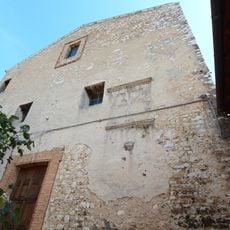
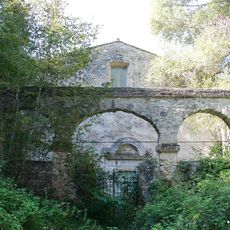
Cascata delle Marmore and Valnerina: Monastic sites and ancient hydrogeological reclamation works
1.3 km
Sant'Antonio da Padova
2.8 km
Rocca di Piediluco
3.8 kmReviews
Visited this place? Tap the stars to rate it and share your experience / photos with the community! Try now! You can cancel it anytime.
Discover hidden gems everywhere you go!
From secret cafés to breathtaking viewpoints, skip the crowded tourist spots and find places that match your style. Our app makes it easy with voice search, smart filtering, route optimization, and insider tips from travelers worldwide. Download now for the complete mobile experience.

A unique approach to discovering new places❞
— Le Figaro
All the places worth exploring❞
— France Info
A tailor-made excursion in just a few clicks❞
— 20 Minutes