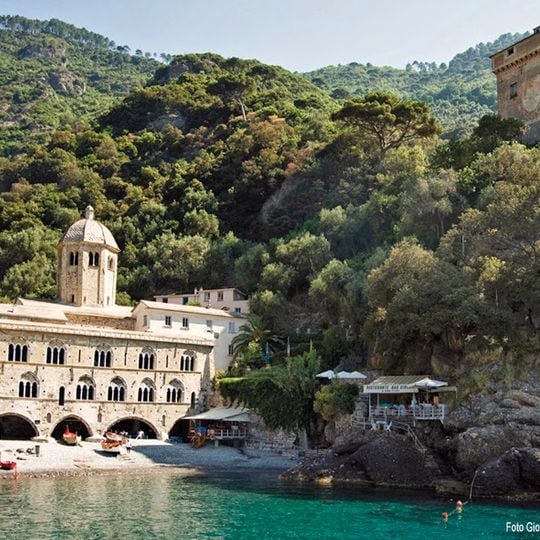
San Fruttuoso Abbey

Log in to your account

AroundUs is a community-driven map of interesting places, built by curious explorers like you. It grows with every review, story, and photo you share.
Connect to save your favorite spots, contribute locations, and create personalized routes.
By continuing, you accept our Terms and Conditions and our Privacy Policy
Add to collection
Map
Suggest a change
Share

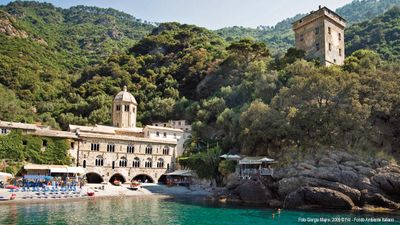
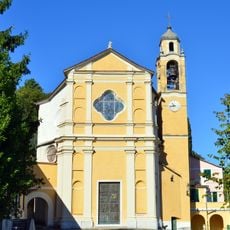
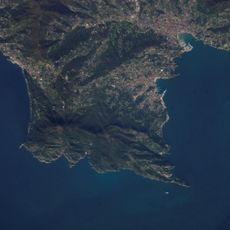
San Fruttuoso Abbey, Benedictine abbey in San Fruttuoso Bay, Italy.

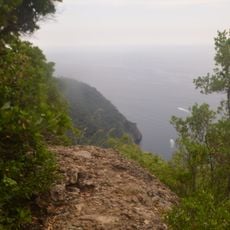
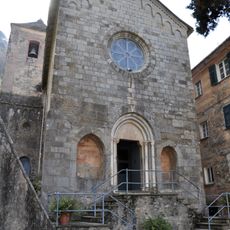
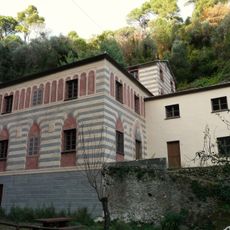
The Romanesque complex occupies a narrow coastal strip between forested mountains and the sea, incorporating a church, cloister, and octagonal defense tower from the sixteenth century. Architectural elements combine monastic structures with fortifications built against pirate raids.

Greek monks brought the remains of Saint Fructuosus here in the eighth century and established a Benedictine monastery. The abbey passed to the Doria family in 1468, who controlled it until the twentieth century before transferring ownership to the Italian state.

The abbey serves as the burial site for members of the Doria family, whose tombs date from 1275 to 1305. The complex now operates under FAI management as a museum open to visitors year-round.

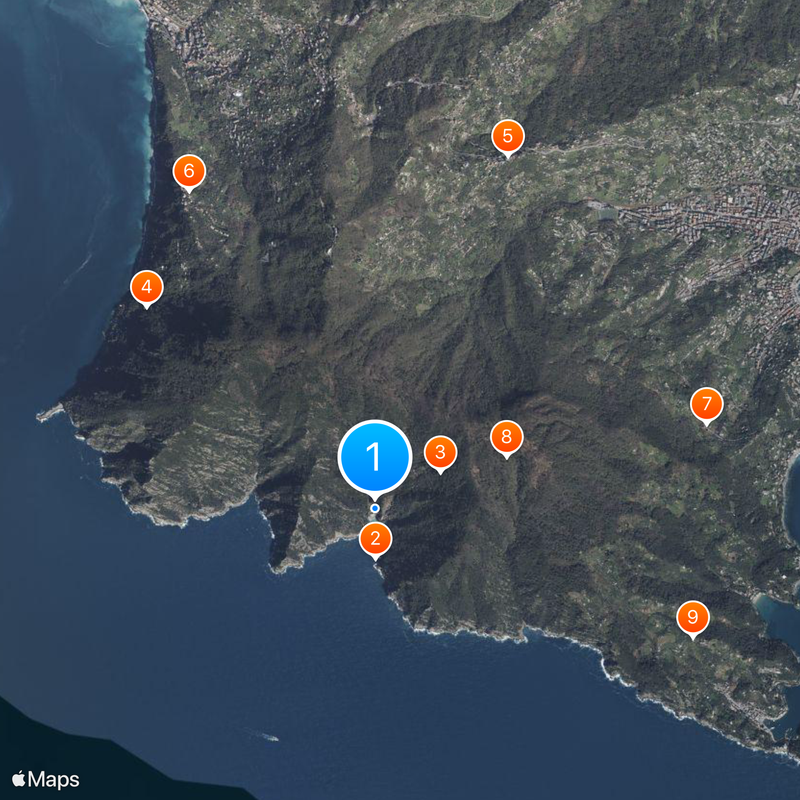
Visitors reach the site by ferry from Camogli or Rapallo or via a two-hour hiking trail from Portofino. Opening hours vary seasonally, with admission fees for church and museum access. Limited accessibility due to historic building structures and remote location.

At 56 feet (17 meters) depth offshore stands the Christ of the Abyss statue, installed in 1954 by sculptor Guido Galletti. The bronze figure was placed to commemorate diver Dario Gonzatti, who died in these waters in 1947.

Location: Camogli

Inception: 10 century

Operator: FAI

Address: via San Fruttuoso, 13 16032 San Fruttuoso

Opening Hours: Tuesday-Sunday 10:00-15:45

Phone: +390185774480

Email: fai.sanfruttuoso@fondoambiente.it

Website: https://chiesadigenova.it/wd-annuario-enti/genova-80/vicariato-di-recco-uscio-camogli-1170/s-fruttuoso-di-capodimonte-93-238

GPS coordinates: 44.31647,9.17514

Latest update: November 28, 2025 08:20

Italy: historical sites, archaeological excavations, medieval villages

Italy preserves numerous historical sites away from standard tourist routes, ranging from medieval hill towns to Etruscan burial grounds. These locations document different periods of Italian history through architecture, art and natural settings. The collection includes Roman archaeological sites such as Palazzo Valentini Domus Romane, where ancient townhouses remain beneath modern streets, and Basilica di San Clemente, which displays three construction phases built one above another. In southern Italy, the Sassi of Matera show cave dwellings from prehistoric times, while the Crypt of the Original Sin presents early Christian frescoes from the 8th century. The architectural variety ranges from the conical trulli houses in Alberobello to the Moorish inspired rooms of Sammezzano Castle. Civita di Bagnoregio sits on a tufa rock plateau separated from surrounding land by erosion. The Greek Theatre of Taormina and the Temple of Concordia in Agrigento document the ancient Greek presence in Sicily. Natural formations such as Grotta Azzurra on Capri and the thermal springs of Saturnia complement the historical structures. The sites spread across the entire country, from the Alps to the Aeolian Islands.

Coastal towns and historic villages in Liguria

Liguria stretches as a narrow coastal strip between the Maritime Alps and the Apennines, combining maritime tradition with mountainous interior. Along the Riviera di Ponente in the west lie towns such as Dolceacqua with its medieval Doria Castle, the fortified town of Noli, and the Hanbury Botanical Gardens near La Mortola. The Riviera di Levante in the east features the Cinque Terre National Park with its coastal villages, Portofino with Castello Brown, and the Baia del Silenzio in Sestri Levante. Finalborgo preserves its medieval structure within the walls of Finale Ligure, while Vernazza with the Church of Santa Margherita d'Antiochia above the harbor belongs to the Cinque Terre. Inland valleys such as Valle Argentina lead to mountain villages that have maintained their historic architecture. Triora sits at 2,559 feet (780 meters) in the Ligurian Alps, Apricale displays stone alleys and vaulted passages, and Cervo perches above the coast between Imperia and Alassio. Bussana Vecchia was abandoned after an 1887 earthquake and later resettled by artists. Castelvecchio di Rocca Barbena clusters around a medieval fortress. The Grotte di Toirano and Borgio Verezzi Caves offer geological formations with stalactites and stalagmites. Montemarcello-Magra Regional Park extends between the coast at Montemarcello and the Magra Valley, while Palmaria Island lies off Portovenere with the Doria Tower. Genoa's Porto Antico connects the historic harbor with modern cultural facilities.

Reviews

Visited this place? Tap the stars to rate it and share your experience / photos with the community! Try now! You can cancel it anytime.

« San Fruttuoso Abbey - Benedictine abbey in San Fruttuoso Bay, Italy » is provided by Around Us (aroundus.com). Images and texts are derived from Wikimedia project under a Creative Commons license. You are allowed to copy, distribute, and modify copies of this page, under the conditions set by the license, as long as this note is clearly visible.

Discover hidden gems everywhere you go!

From secret cafés to breathtaking viewpoints, skip the crowded tourist spots and find places that match your style. Our app makes it easy with voice search, smart filtering, route optimization, and insider tips from travelers worldwide. Download now for the complete mobile experience.

Around Us App Screenshot

A unique approach to discovering new places

Le Figaro

All the places worth exploring

France Info

A tailor-made excursion in just a few clicks

20 Minutes