Monumental Cemetery of Staglieno, 19th century cemetery in Staglieno district, Genoa, Italy
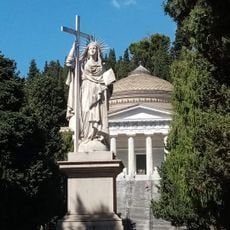
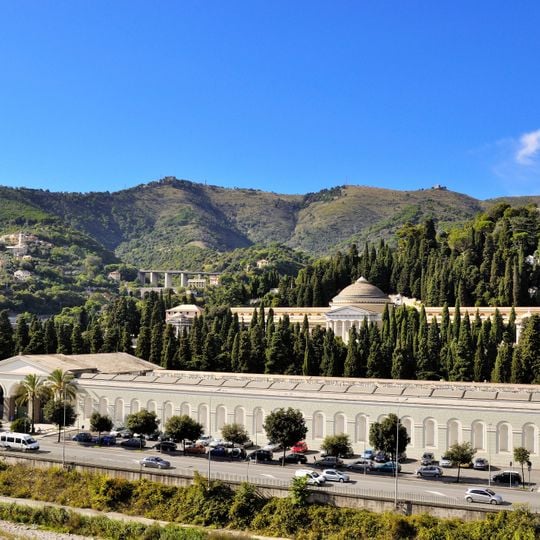
The Monumental Cemetery of Staglieno occupies a hillside in the Staglieno district of Genoa. Its long, low gallery with a pitched roof and a repeating row of tall arched niches runs along the slope. Above it, cypress trees partly hide a domed Pantheon with a Doric portico, a copy of the Pantheon in Rome, flanked by marble statues of the prophets Job and Jeremiah. Further back stand smaller buildings and an arched aqueduct-like structure.
After Napoleon banned burials within cities, this ground was designed in the mid-1800s as an alternative, with architects Carlo Barabino and Giovanni Battista Resasco leading the planning. It opened in 1851 and quickly became the city's primary burial place.
Genoa's affluent bourgeoisie commissioned realistic funerary sculpture from local artists to commemorate their work and moral accomplishments, a tradition visible in the tombs and chapels. The Ligurian name is Camposanto de Stagén. Ernest Hemingway called the cemetery one of the wonders of the world, and Friedrich Nietzsche strolled its colonnades in the 1880s with Paul Ree.
The grounds are accessible on foot, with marked pathways that help visitors navigate the different areas. It is best to wear comfortable shoes since the terrain is uneven and hilly, and exploring can easily take several hours.
Two Staglieno tombs reached a global audience through Joy Division: the Appiani family tomb, sculpted by Demetrio Paernio around 1910, was used on the cover of the album Closer, while a grieving angel by Onorato Toso on the Ribaudo family tomb appeared on the 12-inch single "Love Will Tear Us Apart". Photographer Bernard Pierre Wolff took both images in 1978.
The community of curious travelers
AroundUs brings together thousands of curated places, local tips, and hidden gems, enriched daily by 94,655 contributors worldwide.