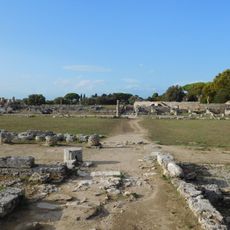
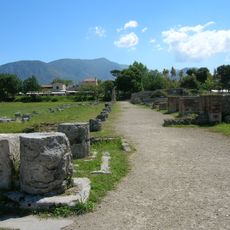
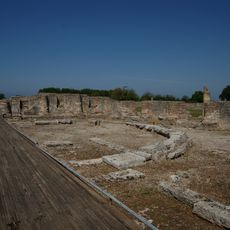
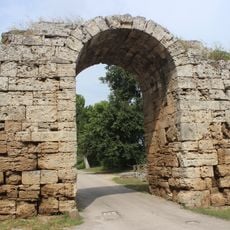
Second Temple of Hera in Paestum, Ancient Greek temple in Paestum, Italy
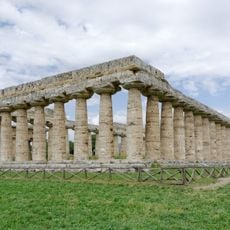
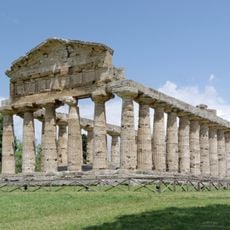
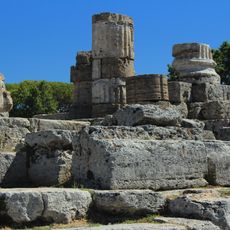
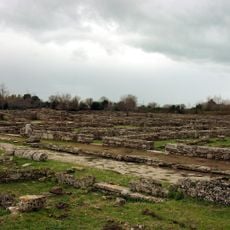
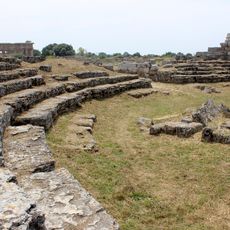
The Second Temple of Hera is a fifth-century BCE Greek sanctuary within the archaeological zone of Paestum. The rectangular building measures roughly 197 feet (60 m) long and 80 feet (24 m) wide, surrounded by 36 columns.
Built around 460–450 BCE, when Poseidonia was at its height, it stood in the southern sanctuary just north of the first Hera temple. The 18th-century name "Temple of Neptune" is a misnomer: it was probably dedicated to Hera, perhaps with Poseidon. Abandoned around the 9th century CE after the site became marshy and malarial, it was listed as a UNESCO World Heritage Site in 1998.
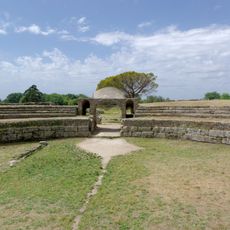
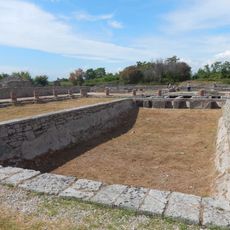
The name Temple of Neptune is an 18th-century misnomer; the building is now thought to have been dedicated to Hera, possibly together with Poseidon. On the east side, remains of two altars are visible: the larger Greek one coeval with the temple, and a smaller Roman one built when a road to a Roman forum was cut through it. Offerings found around the larger altar suggest the shared dedication.
Access is through the main archaeological park, which opens daily and offers information panels in several languages. Visitors can walk around the entire perimeter and view the columns up close from multiple angles.
The 18th-century name "Temple of Neptune" is a misnomer: the sanctuary is now attributed to Hera, though Poseidon may also have been honoured. Some offertory statues found around the larger altar are thought to support a shared dedication.
The community of curious travelers
AroundUs brings together thousands of curated places, local tips, and hidden gems, enriched daily by 94,670 contributors worldwide.