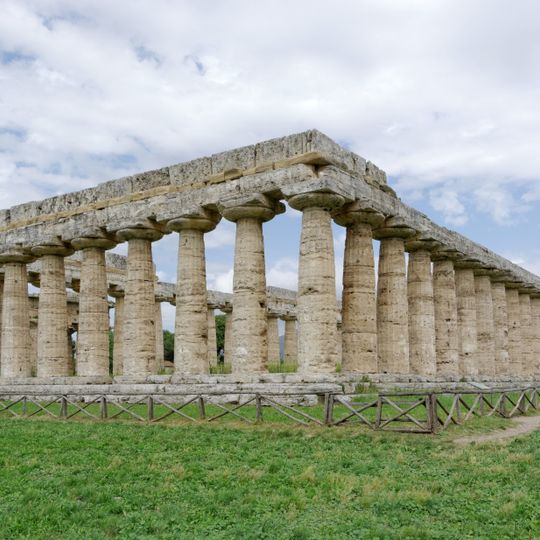
Temple of Hera, Paestum, Greek temple in Paestum, Italy
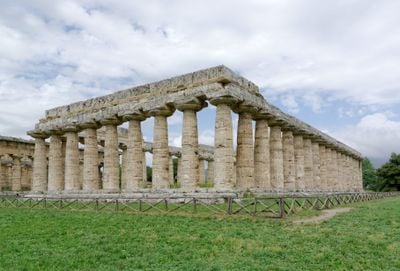
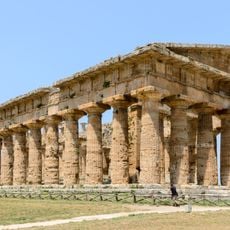
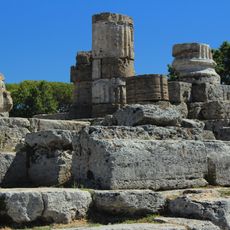
The Temple of Hera in Paestum stands as one of the oldest surviving Greek religious buildings on Italian soil, displaying the Doric order in its archaic form with nine columns on the short sides and eighteen along the long sides. The inner chamber divides through an additional central row of columns, which is uncommon for Doric temples of this period and gives the structure a distinctive spatial arrangement.
Construction started around 550 BCE when Greek settlers from the Sybaris region founded the colony of Poseidonia and honored their gods through monumental stone buildings. Over centuries the temple remained in use until the Romans took over the city and gradually changed the religious practices.
The temple received its alternate name 'Basilica' in the 18th century when archaeologists initially misidentified its function due to missing upper sections.
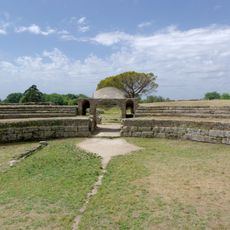
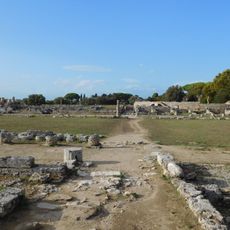
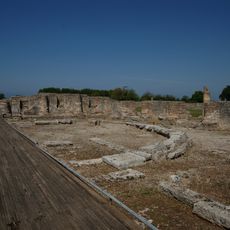
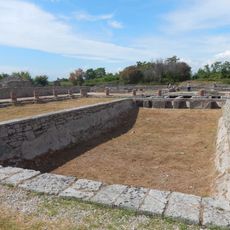
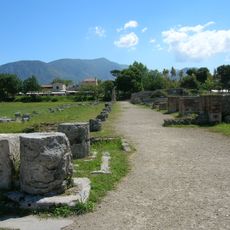
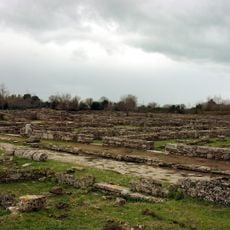
The structure lies in the open area of the archaeological park and can be walked around freely from all sides, allowing views of the columns from different angles. The best lighting for photographs occurs in early morning or late afternoon when the sun highlights the honey-colored surface of the limestone.
The column capitals carry unusual decorations with lotus flowers and rosettes that rarely appear in this combination at other Doric buildings. These ornaments show the influence of eastern artistic traditions on early Greek architecture in southern Italy.
The community of curious travelers
AroundUs brings together thousands of curated places, local tips, and hidden gems, enriched daily by 60,000 contributors worldwide.