Santa Maria della Concezione dei Cappuccini, Baroque church in Via Veneto, Rome, Italy
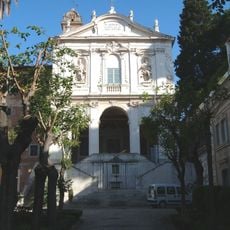
Santa Maria della Concezione dei Cappuccini is a baroque place of worship on the busy Via Veneto in central Rome. The structure consists of a single nave with ten side chapels housing paintings, sculptures and altars dating from the 17th century.
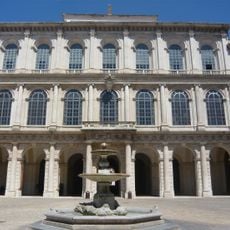
The pope commissioned the building between 1626 and 1631 to honor his late brother, a friar of the order. The project arose at the same time as the nearby Palazzo Barberini and was meant to make the family's connection to the city permanently visible.
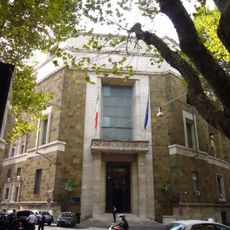
The name comes from the Capuchin friars, a Franciscan reform branch whose brown hooded habit gave them their nickname; this was the first Roman church dedicated to the Immaculate Conception. Cardinal Antonio Marcello Barberini, a Capuchin himself, is buried in front of the main altar. The brick facade with white stone pilasters rises above a scissor staircase, and the adjoining convent holds the Museum of the Capuchin Friars Minor with eight rooms of art, volumes and liturgical objects.
The entrance sits directly on the street, a short walk from Barberini metro station. Visitors planning to see the underground rooms should wear modest clothing and allow extra time, as access involves descending a staircase.
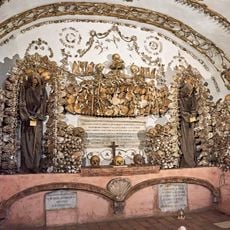
The crypt's five rooms each follow a theme: one is built from shinbones, another from pelvises, another from skulls, and one holds three intact skeletons. A child's skeleton hangs from the ceiling of one chapel, holding a scale and a sickle. The crypt is said to have inspired the ossuary at Sedlec in the Czech Republic and the Skull Chapel in Poland.
The community of curious travelers
AroundUs brings together thousands of curated places, local tips, and hidden gems, enriched daily by 94,624 contributors worldwide.