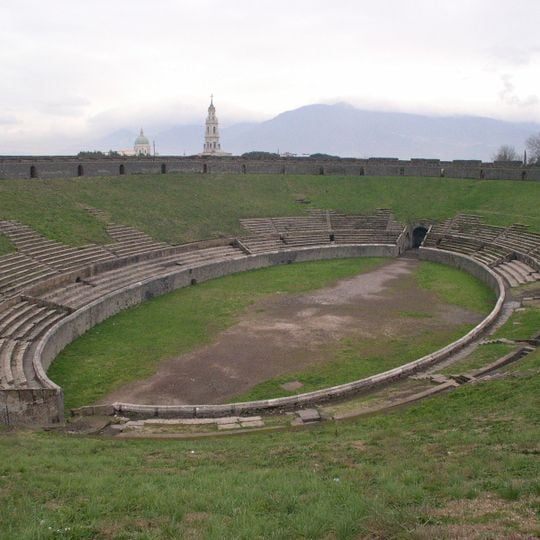
Amphitheatre of Pompeii, Roman amphitheatre in Pompeii, Italy
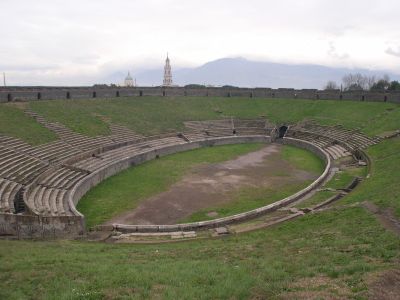
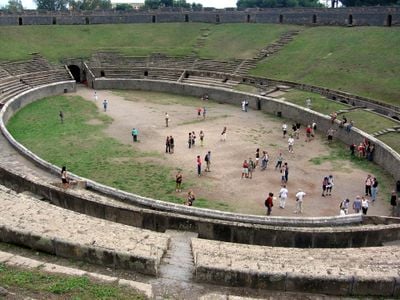
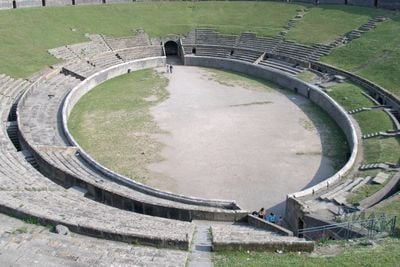
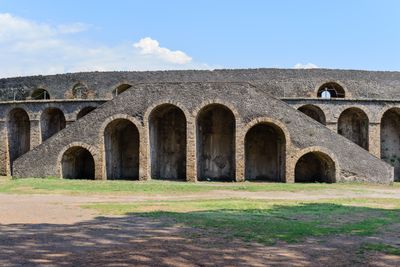
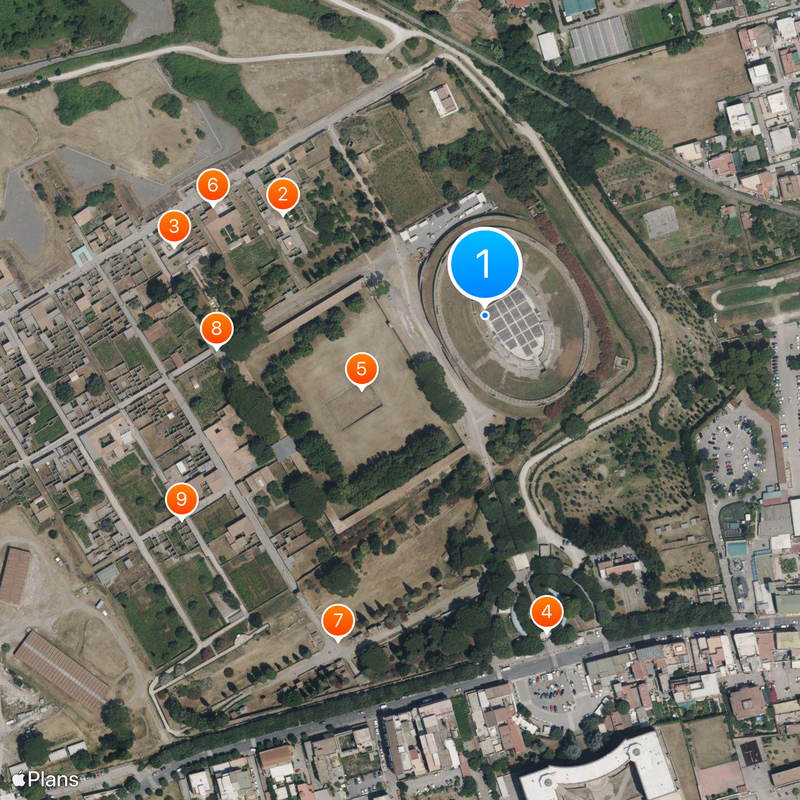
The Amphitheatre of Pompeii is a Roman arena in the ancient city of Pompeii, Italy, located at the southeastern edge of the archaeological site. The oval stone structure has an arena that sits below ground level, with tiered seating rising around the central playing field on multiple levels.
The arena was built around 70 BC by magistrates Caius Quinctius Valgus and Marcus Porcius and is the earliest known Roman stone structure of this type. It remained buried under volcanic ash from the eruption of Mount Vesuvius in 79 AD until excavations began in the 18th century.
This arena hosted gladiator fights and games where the entire community gathered, with separate sections for different social groups. The design reflects how entertainment was organized in ancient Rome, with strict divisions that placed the wealthy close to the action and others farther away.
The site is fully open-air and requires walking, so comfortable footwear is helpful for navigating the staircases and passageways. A visit typically takes about half an hour, depending on how long you spend exploring the tiers and the arena floor.
The arena was the site of a famous riot in 59 AD, when fans from Pompeii and the neighboring city of Nuceria clashed, leading to a years-long ban on games. The incident was documented by ancient writers and shows how intense rivalry between cities could become during such events.
Location: Pompei
Official opening: 76
Architectural style: ancient Roman architecture
Part of: Pompeii Regio II Insula 6, Pompeii
Address: Scavi archeologici di Pompei - Regio II - Insula 6 - 1
GPS coordinates: 40.75126,14.49497
Latest update: December 5, 2025 22:22
Circular architecture has fascinated builders since ancient times. This collection brings together Roman amphitheatres like the Colosseum, medieval towers such as the Round Tower in Copenhagen, baroque domed structures and modern constructions. The circular form offers practical advantages for acoustic properties, structural stability and optimal space usage. The selected buildings serve various functions: religious temples, fortifications, observatories, museums and event venues. Each example demonstrates how architects have adapted the circular form to local conditions and cultural requirements. From ancient stone structures to contemporary skyscrapers, this selection documents technical evolution across centuries.
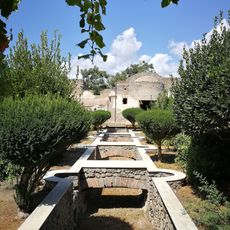
The Garden of the Fugitives
272 m
House of Julia Felix
158 m
House of Octavius Quartio
222 m
Scavi di Pompei
224 m
Casa del Moralista
266 m
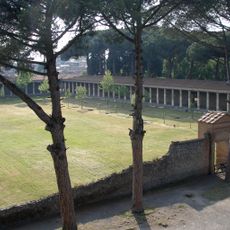
Palaestra
100 m
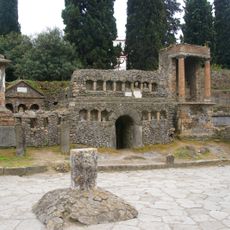
Porta Nocera necropolis
248 m
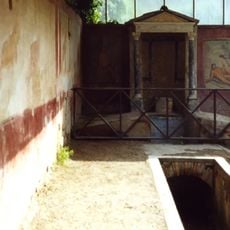
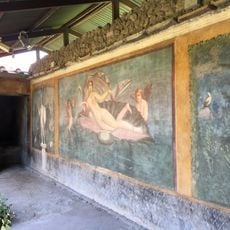
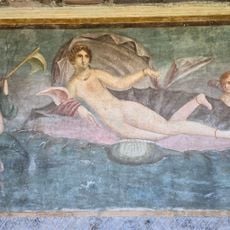
House of Venus in the shell
205 m
Casa del Triclinio all'Aperto
188 m
Hospitium
227 m
Casa senza nome I.21.5.
254 m
Thermopolium of Equitius (I.14.15)
217 m
Shop
235 m
Hotel?
216 m
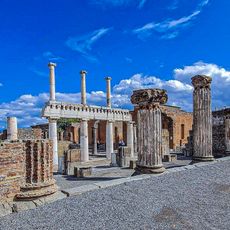
Colonnato
275 m
House of the Sarno Lararium
253 m
Casa di Lesbianus e Numicia Primigenia
248 m
Unidentified house
264 m
Domus of the Aemilii, Primio and Saturninus
261 m
Caupona of Hermes
266 m
Thermopolium (II.4.7)
176 m
Garden (II.5.5)
131 m
Baths of Iulia Felix
176 m
Thermopolium (II.8.2)
217 m
Shop with dwelling (II.3.8)
173 m
Caupona Pherusae
223 m
House of Augustalis
216 m
Hospitium
253 mReal people, real opinions — but not verified.
Visited this place? Tap the stars to rate it and share your experience / photos with the community! Try now! You can cancel it anytime.
Incredible Roman relic. For fans, the live at Pompeii performance by the rock band Pink Floyd was recorded at this location!
Discover hidden gems everywhere you go!
From secret cafés to breathtaking viewpoints, skip the crowded tourist spots and find places that match your style. Our app makes it easy with voice search, smart filtering, route optimization, and insider tips from travelers worldwide. Download now for the complete mobile experience.
A unique approach to discovering new places❞
— Le Figaro
All the places worth exploring❞
— France Info
A tailor-made excursion in just a few clicks❞
— 20 Minutes