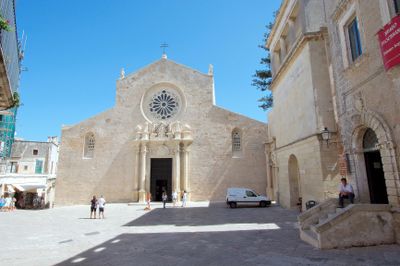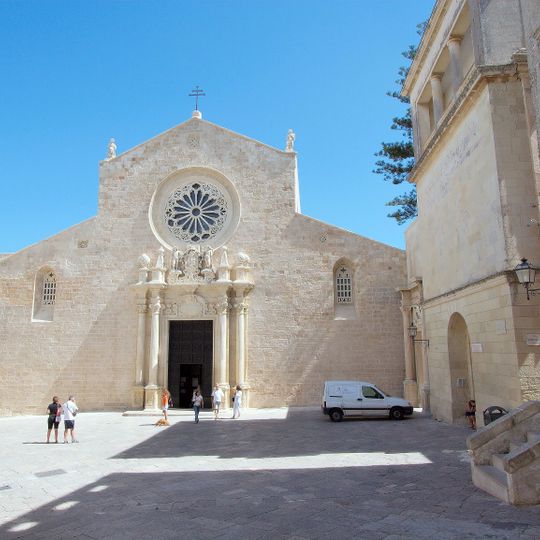
Otranto Cathedral, Romanesque cathedral in Otranto, Italy.
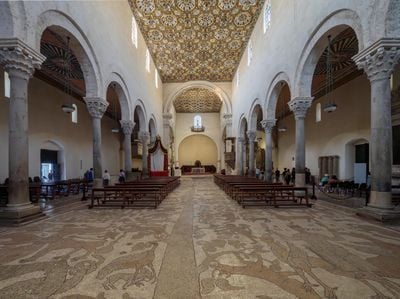
Otranto Cathedral is a Romanesque basilica in the historic center of this coastal town in Apulia, Italy. The building features three naves separated by rows of ancient granite and marble columns, along with an underground crypt supported by numerous columns.
Norman bishop William founded the church building in 1068 on older foundations that include remnants of a Messapic settlement and Roman constructions. In the late 12th century, monk Pantaleone created the expansive floor mosaic combining biblical and mythological themes.
The name Otranto comes from Hydruntum, its Roman designation that referred to water and later evolved into the current form. The cathedral continues to serve as the active religious center of the town, where services are held and worshippers gather for prayer.
Entry is available daily, allowing visitors to view the main nave, the crypt, and the martyrs chapel. Modest clothing is expected as this remains an active worship space, and visiting may be limited during services.
The martyrs chapel preserves the mortal remains of over 800 residents executed in 1480 during the Ottoman siege for refusing to abandon their faith. These bones are arranged visibly behind glass in upright shrines, creating an unusually direct connection to the town's past.
The community of curious travelers
AroundUs brings together thousands of curated places, local tips, and hidden gems, enriched daily by 91,662 contributors worldwide.