Deer Cave, Archaeological cave near Otranto, Italy
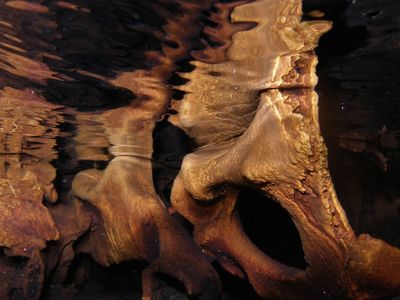
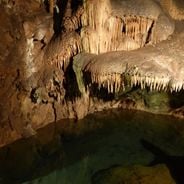
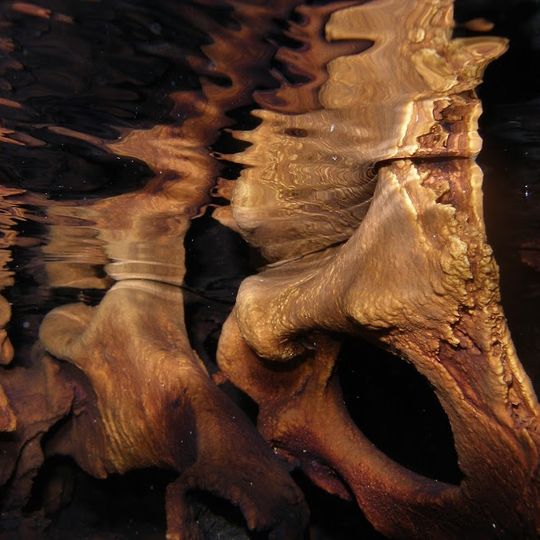
Deer Cave is a coastal karst cave on the Salento coast at Porto Badisco, about 8 km south of Otranto. It has two entrances and three corridors of roughly 200 m each, with a combined length of more than 1,500 m. Its wavy, milk-coloured limestone walls carry about 3,000 pictograms in black bat guano and red ochre, concentrated over 600 m in the three galleries.
Five members of the Salento Speleological Group "Pasquale de Laurentiis" of Maglie found the cave on 1 February 1970 and first called it Antro di Enea, after the legend that Aeneas landed at Porto Badisco. The name Deer Cave came later, from the deer pictograms. The paintings in bat guano and red ochre date to 4000–3000 BC.
The name comes from the deer that recur in the paintings, alongside hunters, dogs, horses, geometric figures and symbols. The pictograms were made with bat guano for black and red ochre, the guano collected inside the cave itself. The best-known image is the so-called dancing God, read as a dancing shaman or sorcerer.
The cave has been closed to the public since shortly after its discovery, and entry is reserved for authorized personnel and researchers. Visitors cannot enter the galleries; the 3D acquisitions made in 2005 and 2009 by the National Research Council Canada and the University of Salento form the basis of a high-resolution virtual tour sold on DVD. The site lies on the flank of a small valley opening onto Porto Badisco, about 8 km south of Otranto.
The best-known pictogram is the "Dancing God", a dancing shaman painted in bat guano and red ochre. Paolo Graziosi's 1980 monograph remains the only scientific on-site documentation of the paintings, and Maria Laura Leone reads the recurring deer and hunting scenes as a creation myth.
The community of curious travelers
AroundUs brings together thousands of curated places, local tips, and hidden gems, enriched daily by 92,783 contributors worldwide.