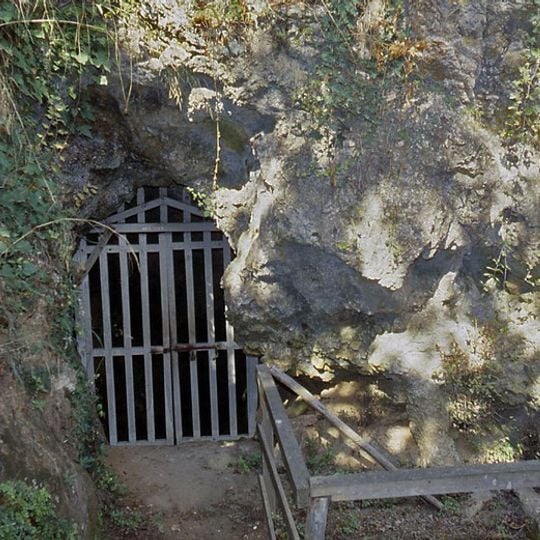
Guattari Cave, Archaeological site in San Felice Circeo, Italy.
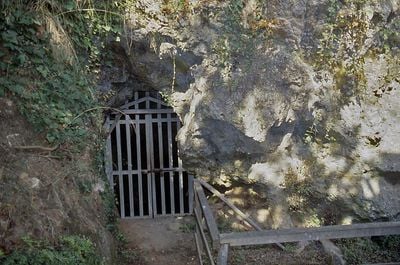
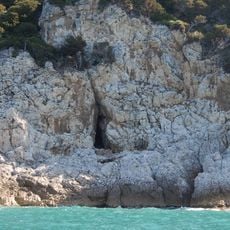
Guattari Cave is an archaeological site in San Felice Circeo on the Italian coast containing skeletal remains of Neanderthals and large animals within its limestone chambers. The bones of aurochs, deer, rhinoceros, and elephants are preserved here alongside evidence of human habitation from tens of thousands of years ago.
The entrance was uncovered by chance on 24 February 1939, when workers quarrying stone for the landowner A. Guattari cleared a landslide that had sealed the cave. Alberto Carlo Blanc and L. Cardini began excavations at once, recovering the skull Guattari 1 and two mandibles. Research paused in the early 1950s and resumed in October 2019; in 2021 nine more Neanderthal individuals were reported, bringing the total to eleven.
The cave takes its name from Alessandro Guattari, the landowner on whose property the entrance was uncovered on 24 February 1939. Local writer Antonio Pennacchi retold the find in his book "Le iene del Circeo", reviving Blanc's early cannibalism hypothesis. The Neanderthal skull is now kept at the Pigorini Museum, the two mandibles at the S.A.B.A.P.-Lazio anthropology service.
The cave is open to visitors only through guided tours to protect its archaeological resources and maintain the site's scientific value. During a tour you will learn how researchers interpret the fossils and what they reveal about life in ancient times.
Hyenas once used the cave as a den and food cache, leaving behind thousands of gnawed bones that reveal details about the ancient environment. These animal traces help researchers understand the landscape and conditions that existed when humans inhabited the site.
The community of curious travelers
AroundUs brings together thousands of curated places, local tips, and hidden gems, enriched daily by 94,403 contributors worldwide.