Palazzo Ducale, Baroque palace in Sassari, Italy
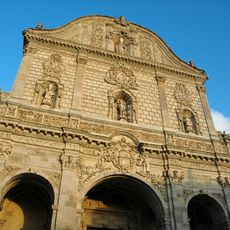
The Palazzo Ducale is a late-18th-century palace in Sassari, built from 1775 to 1805 in a Piedmontese Baroque style. Its sober local limestone facade rises three storeys, with semicircular and triangular pediments over the piano nobile windows and Rococo frames on the top floor. A central balcony was added in 1908, and a balustrade with gargoyles crowns the roofline.
The building was constructed in the 18th century as a residence for Sardinian nobility and later became the central administrative center for Sassari's government. This change in purpose shows the building's growing importance for city governance.
The palace is now Sassari's town hall, and its council chamber is the former reception hall praised by Valery, librarian to the king in Paris. The giunta room holds two 17th-century paintings: a San Gavino and an Arrival in Sassari of the Madonna of Bethlehem by an anonymous artist. The elliptical former private chapel, now the archive, keeps rococo stucco friezes and statues.
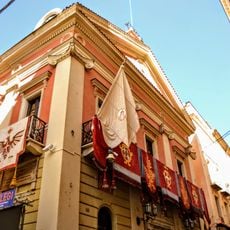
The palace stands on the corner of Via Turritana, with the duke's former carriage house facing it across the street, marked by the Manca coat of arms above its wide portal. The main entrance leads into an atrium with a tongued staircase to the upper floors; the council chamber and the former elliptical chapel, now the archive, are on the upper levels. The inner courtyard, once a citrus garden with a round well, is reached through a corridor between the two flights of the staircase.
In February 1995, renovation work near the entrance uncovered rooms from the late 16th to 17th century, used as storerooms and a cistern and later filled with material of the same period. A stratigraphic survey by the archaeological superintendency followed. The palace, or the earlier "palazzo grande" it replaced, altered this area considerably.
The community of curious travelers
AroundUs brings together thousands of curated places, local tips, and hidden gems, enriched daily by 93,361 contributors worldwide.