Pinacoteca e Museo Civico di Volterra, Art museum in historical center of Volterra, Italy.
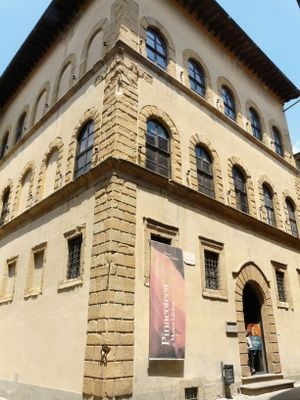
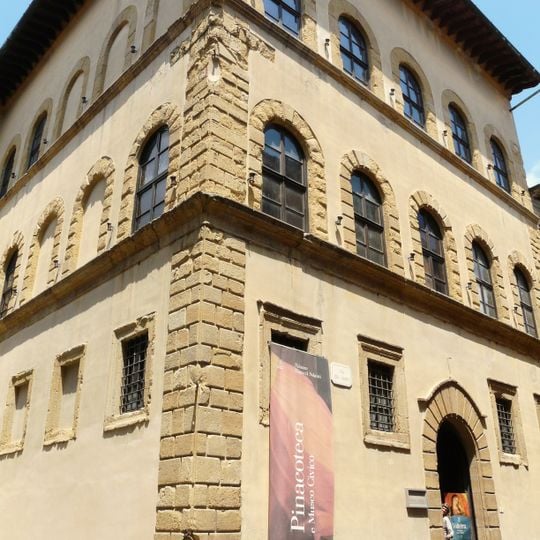
The Pinacoteca e Museo Civico di Volterra occupies the Palazzo Minucci-Solaini, a late-1400s building on via de' Sarti 1, traditionally attributed to Antonio da Sangallo the Elder. Its pale stucco and rusticated stone corner rise beside an open space, with arched windows above and a banner reading "Pinacoteca e Museo Civico" beside the entrance. Inside, the collection includes Rosso Fiorentino's Volterra Deposition, Luca Signorelli's 1491 Annunciation and Enthroned Madonna and Child with Saints, and Taddeo di Bartolo's 1411 Madonna of the Rose.
The collection's core was assembled in 1868 from suppressed churches and monasteries. In 1905 Corrado Ricci opened it as the Galleria Pictorica on the second floor of the Palazzo dei Priori; it stayed closed through the Second World War until 1948. A 1981 exhibition at the Palazzo Minucci-Solaini led to the museum's transfer there, inaugurated on 21 July 1982.
The museum's name, Pinacoteca e Museo Civico, reflects its dual role as a picture gallery and civic museum. The collection's centerpiece, Rosso Fiorentino's Volterra Deposition, was described by Gabriele D'Annunzio in his 1910 novel Forse che sì forse che no after his 1909 visit. Works by Luca Signorelli, Taddeo di Bartolo, and Ghirlandaio are displayed in the Palazzo Minucci-Solaini, a late-1400s building attributed to Antonio da Sangallo the Elder.
The museum occupies the upper floors of Palazzo Minucci-Solaini at via dei Sarti 1, in Volterra's historic centre; the entrance is the arched stone doorway on the lower right of the facade, marked by a banner reading "Pinacoteca e Museo Civico". The palazzo was built in the late 1400s, with its design traditionally attributed to Antonio da Sangallo the Elder.
The museum's centerpiece, Rosso Fiorentino's Volterra Deposition, was already the collection's key work when Gabriele D'Annunzio visited in October 1909; he described several paintings in his novel Forse che sì forse che no. The palazzo housing the museum since 1982 is traditionally attributed to Antonio da Sangallo the Elder.
The community of curious travelers
AroundUs brings together thousands of curated places, local tips, and hidden gems, enriched daily by 93,589 contributors worldwide.