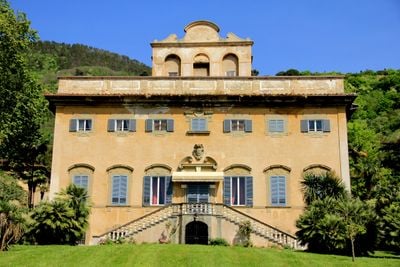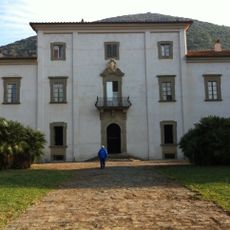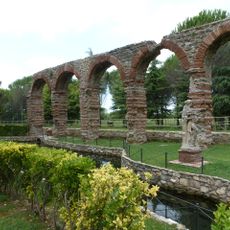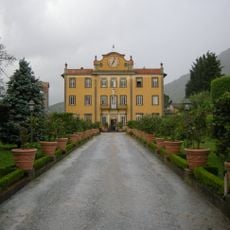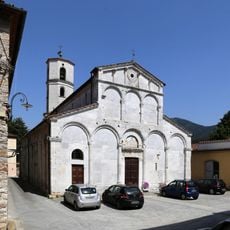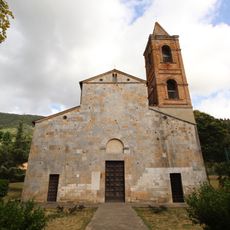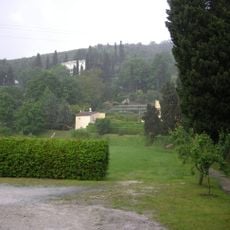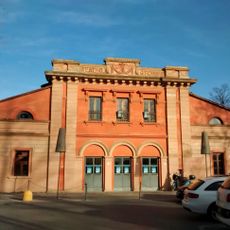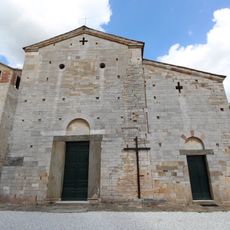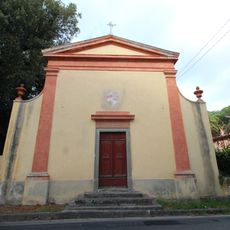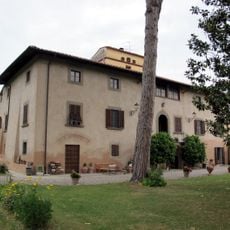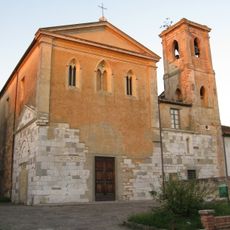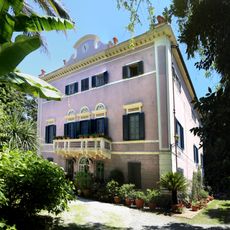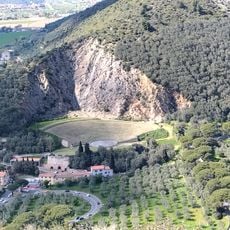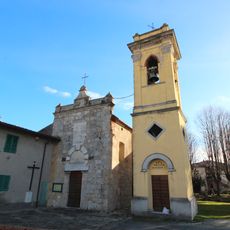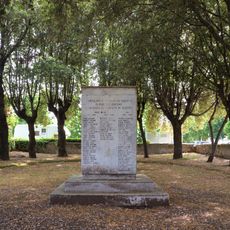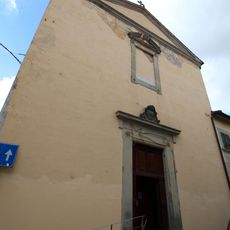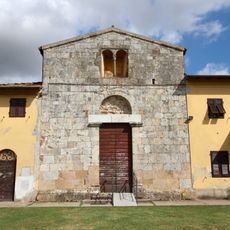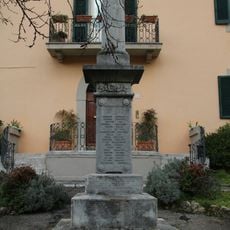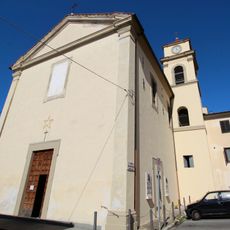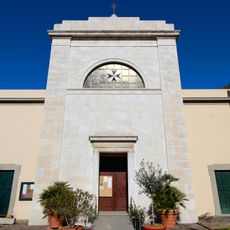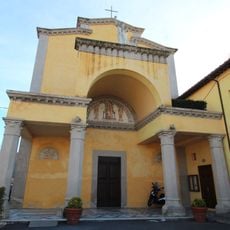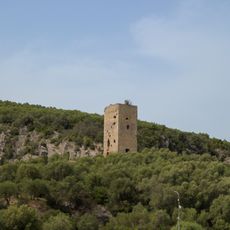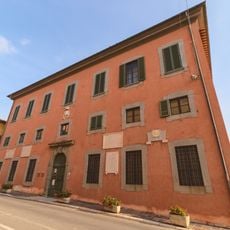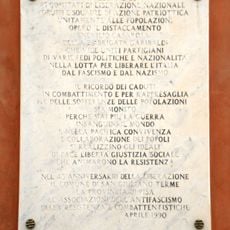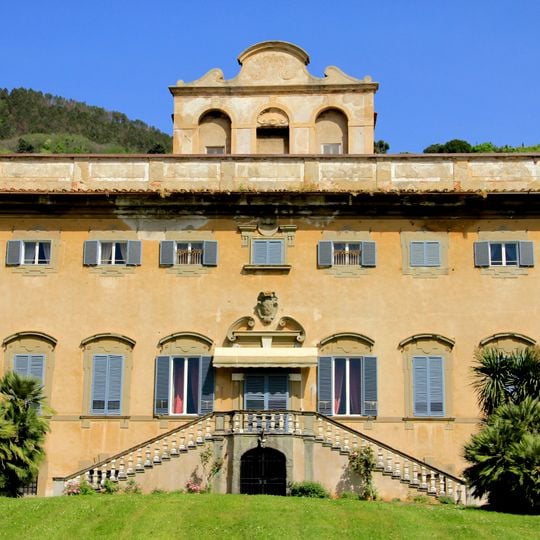
Villa di Corliano, Renaissance villa in San Giuliano Terme, Italy.
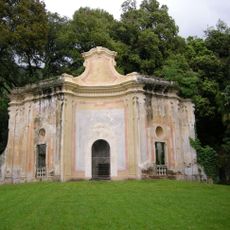
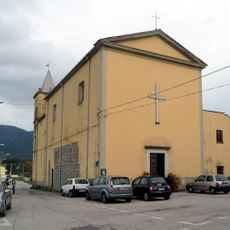
Villa di Corliano is a villa in the locality of Corliano, in the municipality of San Giuliano Terme, built in the first half of the 15th century as a summer residence on the western slopes of the Monti Pisani, halfway between Pisa and Lucca. Its facade carries 16th-century Florentine Mannerist graffiti with harpy eagles, fruit crowns and flowers, and the friezes of the Accademia degli Stravaganti, a turtle and a hare. Around it stand the aristocratic chapel, the farm, the oil mill, the stables and an 18th-century Kaffeehaus.
The estate was extensively rebuilt in 1755 by architect Ignazio Pellegrini for the wedding of Maria Teresa Scolastica to Count Cosimo Agostini Venerosi. Before that, the villa had already passed through the hands of several Tuscan noble families since the medieval period.
The central hall is covered with frescoes by Andrea Boscoli showing mythological scenes alongside the months and signs of the zodiac. These paintings give a direct sense of how the noble residents once wanted to shape and display their living space.
Part of the monumental complex is reserved for extra-hotel accommodation as a Residenza d'Epoca under Regional Law 42/2000, article 58, for the protection of historic buildings listed by the Ministry for Cultural Heritage. The villa remains in the hands of the Agostini Venerosi della Seta family, so the grounds are private property rather than a freely open site. The historic centre of San Giuliano Terme, a spa town, lies about 2 kilometres away, between Pisa and Lucca along the old Via Julia Augusta.
The vestibule displays marble busts of Roman Emperors from the 18th century, and the vault above shows the scene where Paris presents a fruit to the goddess Venus. This reference to the Judgment of Paris myth is rarely found in such a direct connection with a family reception room.
The community of curious travelers
AroundUs brings together thousands of curated places, local tips, and hidden gems, enriched daily by 93,115 contributors worldwide.