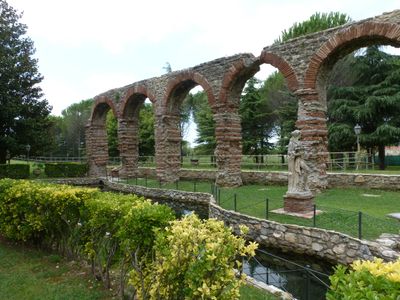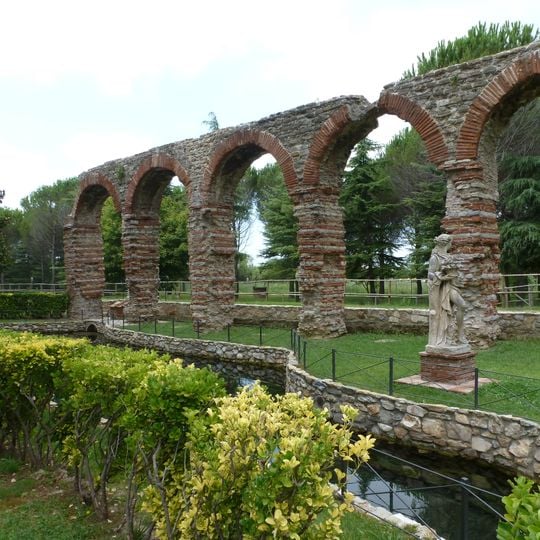
Caldaccoli Aqueduct, Roman aqueduct in San Giuliano Terme, Italy.
The Caldaccoli Aqueduct is a Roman water conduit in San Giuliano Terme built from stone arches and underground channels. It carried both cold spring water and hot thermal water simultaneously to supply the distant city of Pisa.
Construction began in 92 CE when Lucius Venuleius Montanus commissioned the structure to serve the baths of Pisa. The project reflected Roman ingenuity in channeling waters from local springs to distant urban centers.
The name Caldaccoli comes from the Latin calidae aquae, "hot waters", after the thermal spring that fed the conduit near today's San Giuliano Terme. Water from that spring was carried to the baths of Pisa, called Bagni di Nerone in the Middle Ages. The only surviving remains, eight arches and a five-metre right-angled corner, stand on private land.
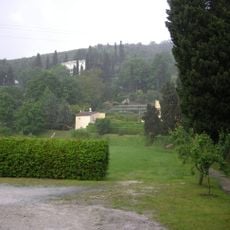
The remains sit within a private garden along Via Statale Abetone and require advance permission to visit. Access is restricted since the property is privately owned and not open to casual foot traffic.
The two waters travelled on separate levels: cold water ran along the top of the arches, while the hot water from the calidae aquae spring passed through buried glazed terracotta fistulae on a masonry base. The German text's "separate internal pipes" misstates this surface/underground split.
The community of curious travelers
AroundUs brings together thousands of curated places, local tips, and hidden gems, enriched daily by 93,763 contributors worldwide.