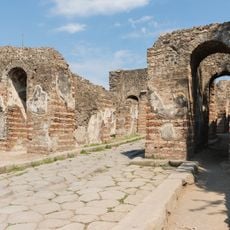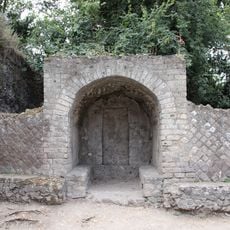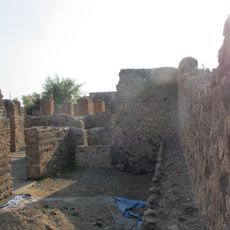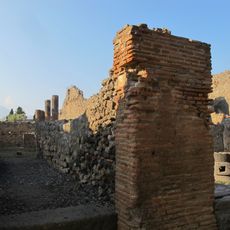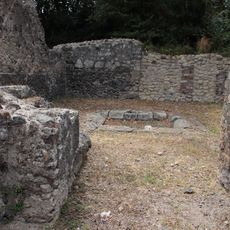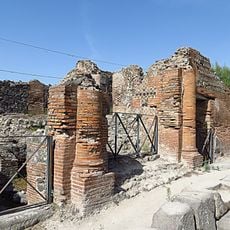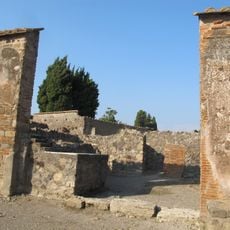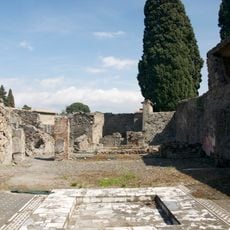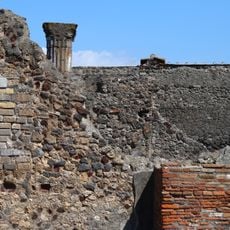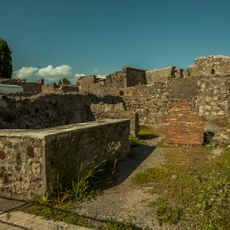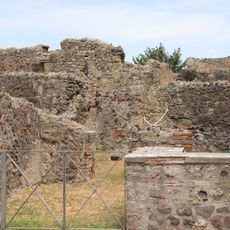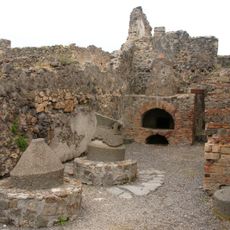
House of the surgeon, Ancient Roman villa in Pompeii, Italy.
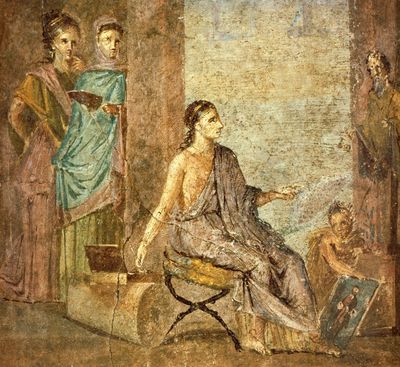
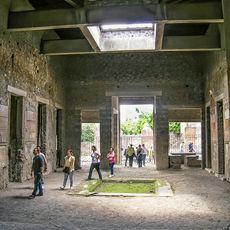
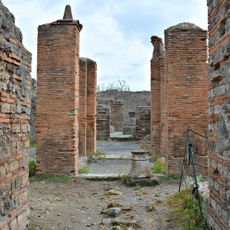
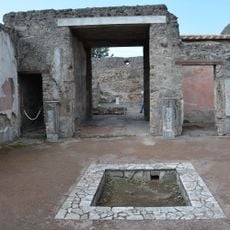
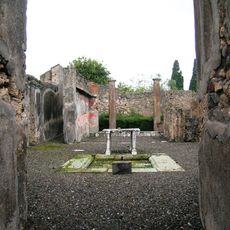
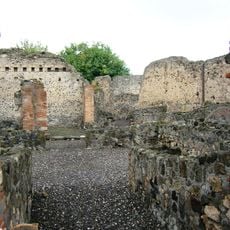
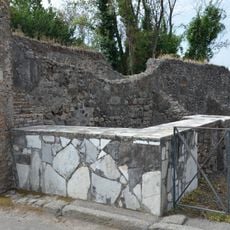
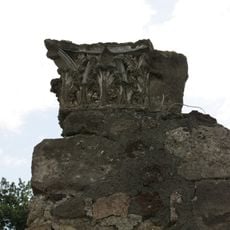
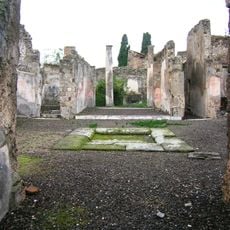
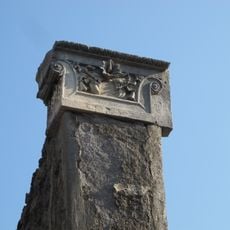
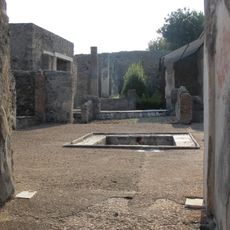
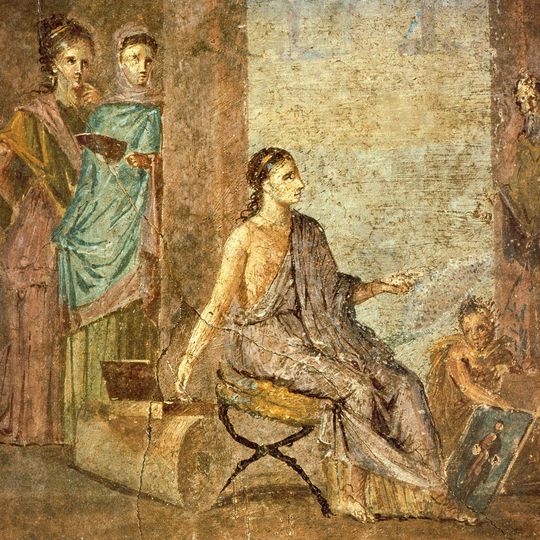
The House of the Surgeon is a Roman domus with a façade of opus quadratum ashlar in Sarno limestone and an atrium courtyard built in opus africanum. The entrance opens directly onto the street; beyond a short corridor the atrium has a tufa impluvium and is ringed by small cubicula, with the tablinum at the rear facing a garden portico on two limestone piers. A windowed room preserves paintings in the First and Fourth Styles, including a woman painting Dionysus.
The house was long dated to the 4th–3rd century BC from its walls, but in 1926 A. Maiuri found a coin of 214/212 BC in rubble beneath the atrium, and a wall under the tablinum points to a date no earlier than c. 200 BC. In 2005 excavation of insula VI 1 showed the atrium gained a compluvium and impluvium in the 2nd century BC. By 79 AD it had fallen derelict, with a collapsed floor and timber props.
The house takes its name from about forty surgical instruments found during the excavations, in iron and bronze: probes, catheters, forceps, pincers and scalpels, now in the National Archaeological Museum of Naples. In a windowed room facing the garden, a first-style fresco outside and fourth-style inside include a woman painting Dionysus on a panel held by a cupid, detached and moved to the same museum.
The house sits in Insula VI 1, north of Pompeii's Via dei Vesuvio, with its entrance opening directly onto the street. The atrium's impluvium and the garden portico are the easiest features to pick out. The site is exposed, so bring water and sun protection; the paving is uneven in places.
Excavations in the 1920s uncovered a coin from the third century BC within the house, revealing that the structure was older than originally believed. This discovery shifted understanding of when the building was first constructed and showed the walls had been modified over time.
The community of curious travelers
AroundUs brings together thousands of curated places, local tips, and hidden gems, enriched daily by 92,672 contributors worldwide.