Castello di Castrocucco, Medieval castle in Maratea, Italy
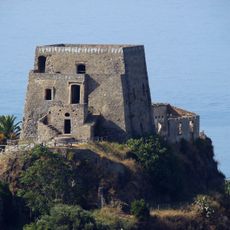
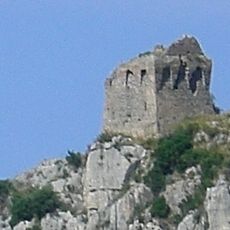
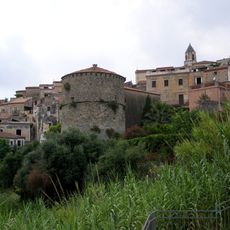
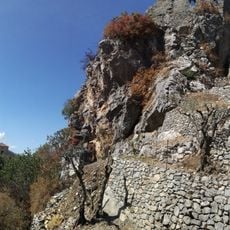
Castello di Castrocucco is a ruined hilltop castle on a rocky ridge near the hamlet of Castrocucco in Maratea. Its surviving features include the entrance gate, corner bastions, sections of the perimeter wall, and a partly collapsed round tower by the east entrance with openings for crossbows and arquebuses. Nearby are the remains of over 20 buildings, a watchtower, and a church traditionally dedicated to Saint Peter.
The castle was probably built in the 9th century, as its name appears in a 1079 bull by Alfano I, bishop of Salerno. It was a Byzantine castrum and later a fief of the Norman Alvernia family. Abandoned between the late 14th and early 15th century, it passed to the De Rosa and Giordano families between 1470 and 1660, and from 1664 to the Labanchi of Bisignano until the 19th century.
Local tradition holds that the church in the abandoned village was dedicated to Saint Peter; inside, crypts and traces of old paintings survive despite long exposure to the weather. Since 2015 a red flag with a white cross has flown on the castle summit, raised anonymously to draw attention to the decay of the rock and the old settlement.
Access to the site is via a local road from Maratea that reaches the base of the hill, from where a walking path leads to the summit. The ground is uneven and steep in places, so sturdy footwear and time for the climb are recommended.
Since 2015 a red flag with a white cross has flown on the summit of the castle. It was raised by anonymous hands to draw the attention of citizens and institutions to the poor state of conservation of the rock and the old settlement of Castrocucco.
The community of curious travelers
AroundUs brings together thousands of curated places, local tips, and hidden gems, enriched daily by 94,581 contributors worldwide.