Castle of Gioia Sannitica, Medieval castle in Gioia Sannitica, Italy.
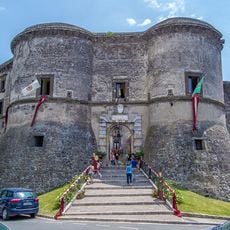
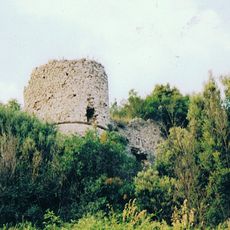
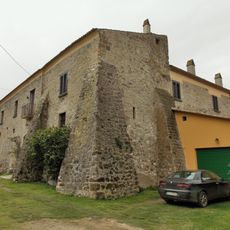
Castle of Gioia Sannitica is a Norman-origin ruin on an isolated hill in the Caselle district. Past an old portal, the archaeological area splits into the castle on the left, dominated by a cylindrical main tower, and the borgo on the right, which grew on the slopes below. The walls show layers of Swabian and Angevin rebuilding, and near the tower a wide space with a fireplace marks the probable site of the castle hall.
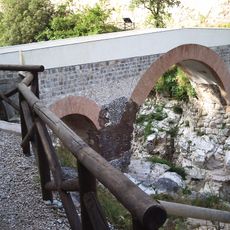
The castle is of Norman origin: the Catalogus Baronum records a feudal lord at Gioia who probably built it. Under the Swabians and Angevins the outer curtain was strengthened, a new gate with Gothic arches was built and a masonry rampart was added. The 1394 earthquake damaged the main tower, and plague epidemics led to the abandonment of the castle and the village below between the late 14th and 15th centuries.
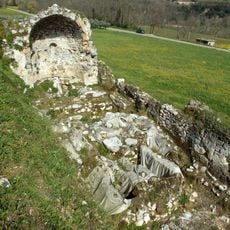
The castle site is split between the fortress on the left and the borgo on the right, a small village that grew on the slopes below. The borgo was abandoned by the 15th century, likely because of the 1394 earthquake and plague epidemics that emptied many Volturno villages. Ceramic fragments found here date no later than the 14th century.
The site divides into two main areas you can walk through: the archaeological excavation zone and the main fortification, with pathways marking the route. Wear sturdy footwear since the ground is uneven and some sections involve rougher paths alongside the stone walls.
Near the central tower stands the remains of a large fireplace that once warmed the main castle hall, revealing where the fortress's most important residents gathered. This fireplace survives as one of the best-preserved interior features, showing what daily life was like for those who held power here.
The community of curious travelers
AroundUs brings together thousands of curated places, local tips, and hidden gems, enriched daily by 94,035 contributors worldwide.