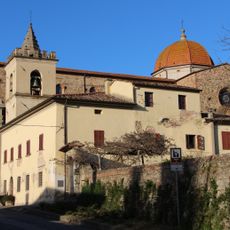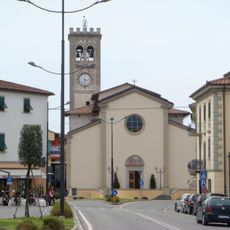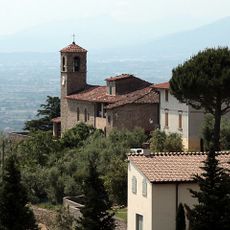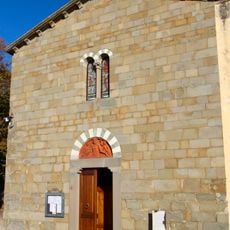
Castello di Larciano, building in Larciano, Italy
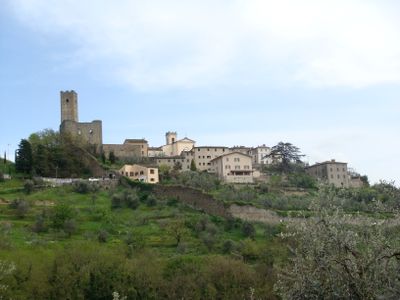
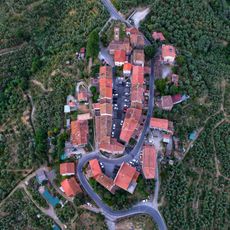
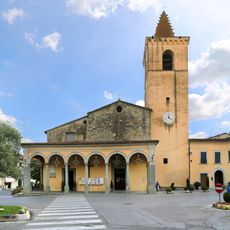
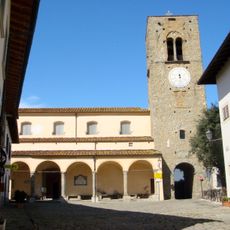
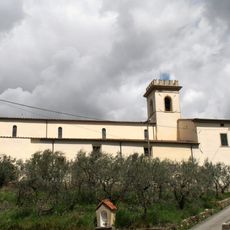
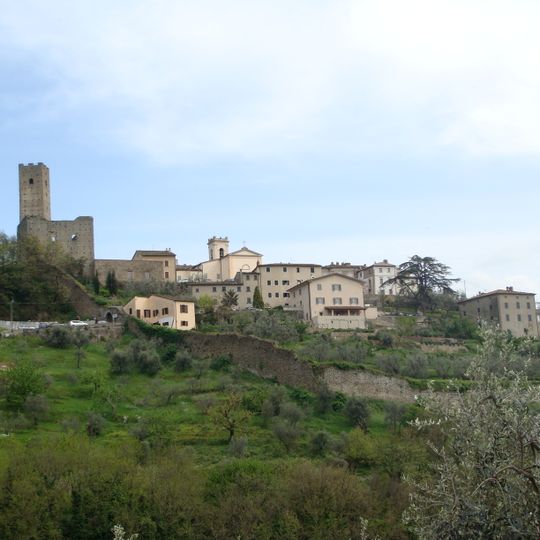
Castello di Larciano is a fortification on the slopes of Montalbano at 165 metres above sea level, in the province of Pistoia. Its current layout dates to the 13th century, when Pistoia strengthened the walls, which ran about 1,050 metres; part of the circuit survives. Of the four towers only the tallest remains, 40 metres high, surrounded by the cassero. The internal partition walls are lost, and a working cistern stands in the courtyard.
The site held an Etruscan villa and later a Roman one before Count Tegrimo, ancestor of the Lombard Guidi counts, built a 40-metre watchtower in 927. In 1225 Guido Guerra di Modigliana's four sons sold the castle to Pistoia for 6,000 Pisan lire; Pistoia walled it with about a kilometre of ramparts and two gates, Bagno and San Marco. In 1302 Florentine and Lucchese troops besieged it, and Pistoia paid 10,000 gold florins to recover it in 1310.
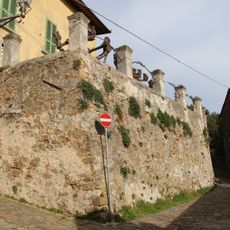
The name Larciano likely derives from the Latin "Larcius," reflecting the area's ancient roots. Today, the thick stone walls and narrow windows reveal how medieval residents built their defenses and organized daily life behind these fortifications.
The tower can be climbed by about 200 steps, and part of the roughly 1,050-metre circuit of walls is intact and walkable. Three gates still open onto the single piazza, from which three roads converged on the main square. The archaeological museum is set up inside the keep, not in a basement.
The Marzocco, a seated lion holding Florence's lily shield, stands on a column in the square facing the castle; its head is missing. Local tradition attributes the decapitation to old rivalries between Larciano and the neighbouring village of Cecina. The castle's well is still working in the courtyard.
The community of curious travelers
AroundUs brings together thousands of curated places, local tips, and hidden gems, enriched daily by 94,604 contributors worldwide.