Castle of Melfi, Norman castle in Melfi, Italy
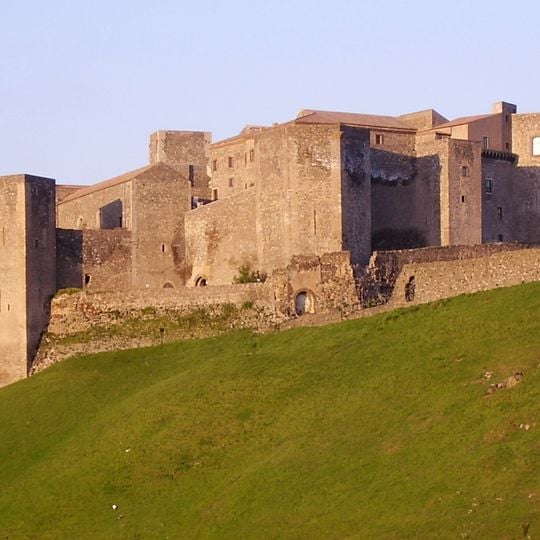
The Castle of Melfi is a medieval limestone fortress perched on a hilltop in Basilicata with ten defensive towers—seven rectangular and three pentagonal in shape. The complex includes a baronial palace, chapel, and museum spaces distributed within its walls.
The Normans began building the castle in the late 11th century on a hilltop guarding the route between Campania and Apulia. In 1059 Pope Nicholas II stayed here and concluded the Concordat of Melfi, naming Robert Guiscard Duke of Apulia and Calabria. Between 1059 and 1137 five papal councils met in the castle. In 1231 Frederick II promulgated the Constitutions of Melfi here, and from 1277 to 1280 the Angevin architect Pierre d'Agincourt gave the complex its present form.
The castle houses the National Archaeological Museum of the region, displaying ancient finds including a Roman sarcophagus from Rapolla. The collection reveals the different cultures that shaped this part of Southern Italy over the centuries.
You enter through the main gate, which was once a drawbridge, and can then explore the various rooms inside. It makes sense to allow enough time for your visit, especially if you want to see the museum displays.
Frederick II promulgated the Constitutions of Melfi here in 1231, drafting them with his notary Pietro della Vigna and the philosopher Michael Scot. The code was proclaimed in the hall known as the Sala della Coppa, and the castle also held the kingdom's archive and tax deposits.
The community of curious travelers
AroundUs brings together thousands of curated places, local tips, and hidden gems, enriched daily by 93,849 contributors worldwide.