Buccione Castle, Medieval castle in Orta San Giulio, Italy
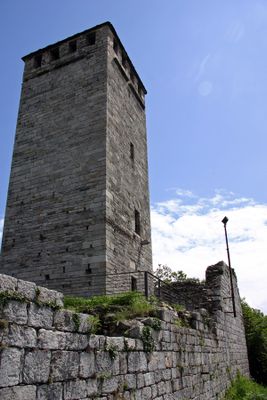
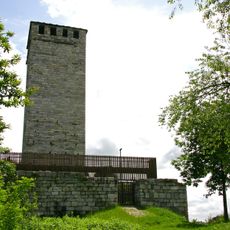
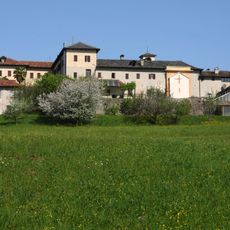
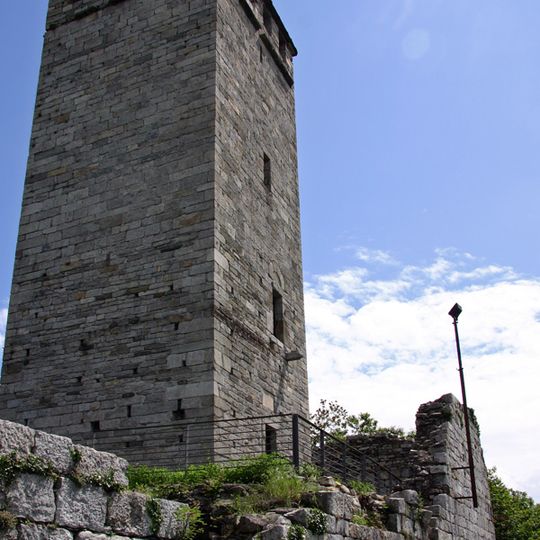
Buccione Castle stands on the summit of a hill at the southeastern end of Lake Orta, on the border between Orta San Giulio and Gozzano. Its square keep, built of squared stone blocks, rises 23.20 m and is divided into five floors with wooden platforms and a covered battlemented cell. A square curtain wall and a rectangular service building completed the fortification, and access was through a walled esplanade described as capable of holding five hundred men.
The first mention of the tower dates to a 1200 document, an agreement made in the meadow below the castle ("in prato subtus castellum Buzoni") between the lords of Crusinallo and the commune of Novara, ending a territorial dispute. In 1205 it is cited as a bishop's residence, and a 1235 document attributes its ownership to the bishop of Novara. A sentence of 25 October 1219 recognized episcopal lordship over the Riviera di San Giulio. The complex was probably built in the third quarter of the 12th century, likely by the counts Da Castello.
The statutes of the Riviera di San Giulio required every able-bodied man to come armed at the sound of the tower's bell. The castle's name, like that of the hill and the nearby hamlet of Gozzano, comes from Buccione. The fortress stood as the symbol of the Riviera's independence.
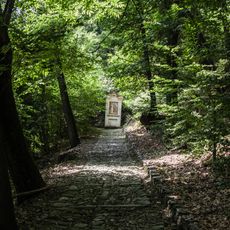
Access to the castle comes through pathways on the hillside with parking available near the village. It makes sense to wear sturdy shoes as the climb is steep and the paths are uneven.
The tower bell, added after the roof in the 14th–15th century, was rung on 4 November 1918 to announce the end of World War I, and then annually until World War II. It was moved to the garden of Villa Bossi, Orta's town hall, for safekeeping and returned to the tower in 2005 after restoration.
The community of curious travelers
AroundUs brings together thousands of curated places, local tips, and hidden gems, enriched daily by 92,770 contributors worldwide.