Castello marchesale, Renaissance castle in Palmoli, Italy
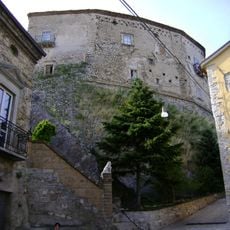
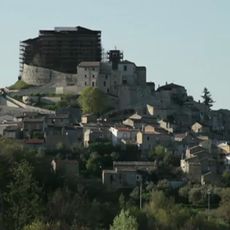
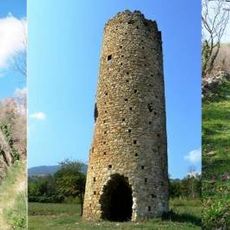
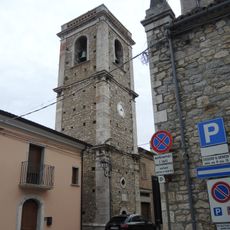
Castello marchesale is a fortified residence in Palmoli featuring a distinctive 12-sided tower from the 16th century alongside a circular tower and the Severino-Longo palace. The complex displays a combination of local limestone elements with decorative brick and tile patterns across its walls.
The castle was founded in 1095 by the Pandulfo-Di Sangro family as a fortified stronghold in the region. During the 15th century, major renovations transformed it into the palace structure visible today, reflecting the evolving needs and tastes of its noble residents.
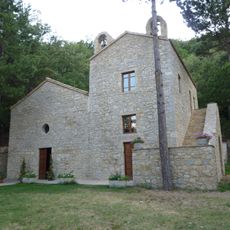
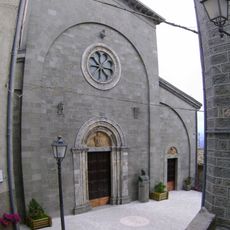
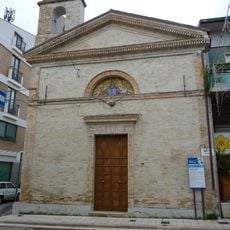
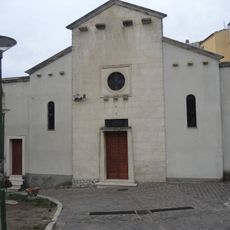
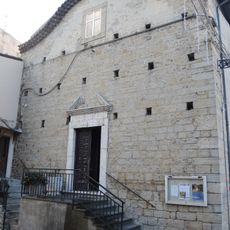
Inside one wing of the castle is the Museo della civiltà contadina e dei castelli abbandonati del Vastese, whose ethnographic section was set up in 2007 and which displays archaeological finds. The building also carries the name of the Severino-Longo family, and the chapel inside is dedicated to San Carlo Borromeo.
The castle stands in the Le Coste district, the northern quarter of Palmoli, on the side defending the Treste river. The complex combines the dodecagonal tower, the incorporated circular tower, the Severino-Longo palace and the church of San Carlo Borromeo, with an internal garden fitted with casemates. A wing of the castle houses the Museo della civiltà contadina e dei castelli abbandonati del Vastese, whose ethnographic section was set up in 2007.
Archaeological digs on the grounds unearthed glazed ceramics from the 11th century between the circular and polygonal towers, revealing earlier occupation of the site. This discovery hints at a much older settlement history than the official founding date suggests.
The community of curious travelers
AroundUs brings together thousands of curated places, local tips, and hidden gems, enriched daily by 94,090 contributors worldwide.