Castello della Pietra, Medieval castle on coastal cliff in Roseto Capo Spulico, Italy.
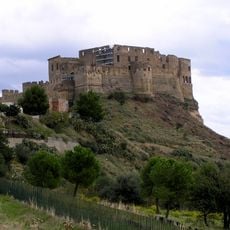
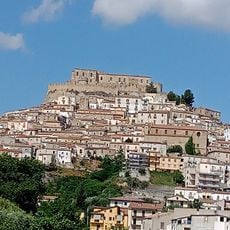
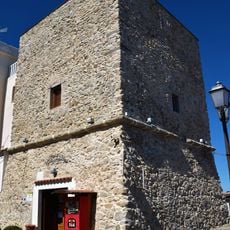
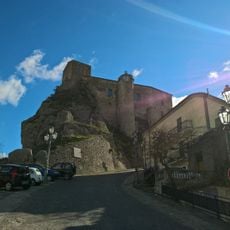
Castello della Pietra, also called Castrum Petrae Roseti, stands on the Cardone promontory above the sea at Roseto Capo Spulico. It has a trapezoidal plan with three towers, one of them crenellated and taller than the others. Inside are large reception halls; outside, cisterns and stables. The present structure is no earlier than the 16th century, with older traces found during recent restorations.
The castle was built in the 11th century by the Normans on the ruins of a Basilian monastery near the small stone village of Roseto. It marked the border between the lands of Duke Robert Guiscard and those of his brother Roger I of Sicily. Frederick II of Swabia had it rebuilt around 1200, and further alterations continued until the 16th century.
The name Castrum Petrae Roseti means "castle of the stone of Roseto", after the small stone village of Roseto that stood nearby, today Roseto Capo Spulico. Below the walls, in the sea, lies a small rock called the "pietra dell'incudine", the anvil stone, also known as the "scoglio incudine".
The castle is privately owned and was listed for sale, so it is not open as a regular monument; visits depend on the owner's permission. It stands on the Cardone promontory directly above the sea, reached on foot from Roseto Capo Spulico. The present building dates from no earlier than the 16th century, with traces of older work found during recent restorations.
Historical records suggest the fortress may have housed the Holy Shroud between 1204 and 1253 while in the custody of the royal family. This theory, though not definitively proven, connects the castle to one of Europe's most famous religious artifacts.
The community of curious travelers
AroundUs brings together thousands of curated places, local tips, and hidden gems, enriched daily by 94,388 contributors worldwide.