Sant'Antioco catacombs, Early Christian catacombs in Sant'Antioco, Italy.
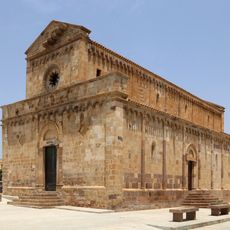
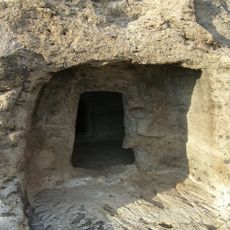
The Sant'Antioco catacombs are underground burial chambers beneath the Sant'Antioco Basilica, carved into volcanic rock. Multiple rooms contain wall niches and floor graves that served different groups in the population.
The catacombs were created by connecting Punic burial chambers of the 5th century BC so that the first Christians could be buried near the tomb of Saint Antiochus. In 1615, Archbishop Francisco de Esquivel of Cagliari had the martyr's body removed, destroying the original tomb, which was later rebuilt approximately to its former dimensions. In the 11th century, Victorine monks from Marseille, who held the church, added six marble columns around the tomb, possibly to form a processional route.
The burial chambers show social divisions through their design, with decorated niches for wealthy families and simple floor graves for ordinary people. This arrangement reflects the social order that visitors can observe as they walk through.
Access is through guided tours starting at Piazza Parrocchia 22, where professionals explain burial customs and architectural features. The underground rooms require careful stepping and willingness to move through narrow, dim passages.
In the pagan section, the tombs were never reused by Christians, so their original form survives; the only original entrance is still sealed by a large stone in front of the central partition, and the openings visitors use were cut by archaeologists in the 20th century.
The community of curious travelers
AroundUs brings together thousands of curated places, local tips, and hidden gems, enriched daily by 94,405 contributors worldwide.