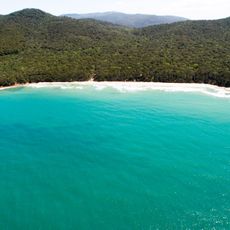
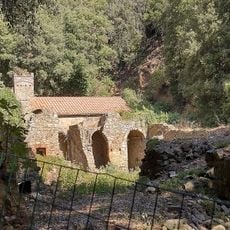
Castello di Punta Ala, 16th-century fortification in Punta Ala, Italy
The Castello di Punta Ala is a 16th-century fortress featuring a polygonal bastion, curtain walls, and a central square tower as its core. The entrance is marked by a portal with an external staircase that leads to the structure.
The Grand Duke of Tuscany, Cosimo I de' Medici, commissioned this coastal defense structure in 1562, with construction completed by 1563. It was part of a broader strategy to protect Tuscan shores from raids and incursions.
The castle's name changed with its uses: built as Torre di Troia Nuova, it was renamed after the Lorraines gave it its castle form in 1788. The chapel of Sant'Antonio, added in 1707, sits within the defensive complex. In 1932 it became the private residence of Italo Balbo, the aviator and governor of Libya.
The castle stands on the summit of the promontory above Punta Ala, reached on foot along the path up from the village. The entrance portal opens at the raised level, preceded by a long external staircase that originally ended at a drawbridge. From the top of the tower, the Torre Hidalgo to the north-west, the Torre di Cala Galera to the south-east and the Torre degli Appiani on the Isolotto dello Sparviero are all visible.
From its elevated position, the fortress maintains visual contact with three other historical towers: Torre Hidalgo, Torre di Cala Galera, and Appiani Tower. This sightline reveals how coastal fortifications worked as a connected network.
The community of curious travelers
AroundUs brings together thousands of curated places, local tips, and hidden gems, enriched daily by 93,587 contributors worldwide.