Paolo Gorini Museum, Natural history museum in Ospedale Vecchio, Lodi, Italy.
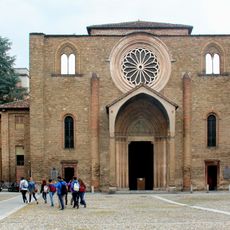
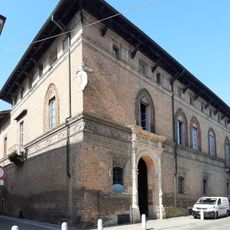
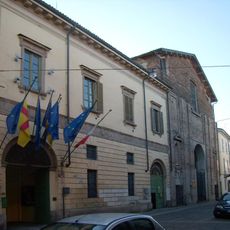
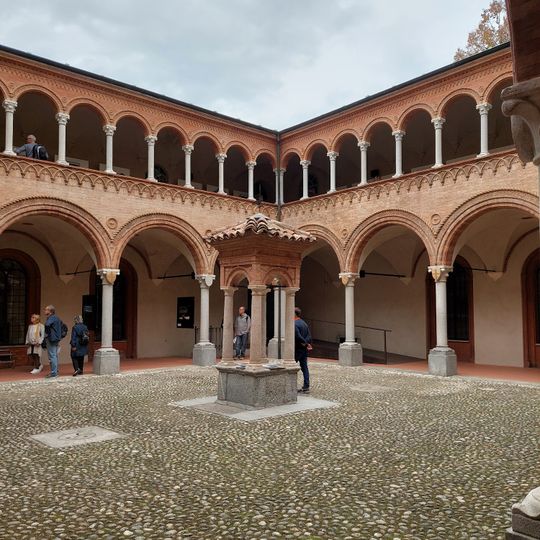
The Paolo Gorini Museum occupies the former chapter house of the friars in Lodi's Ospedale Vecchio, now the ASL offices. It holds 166 anatomical preparations Gorini made between 1842 and 1881, arranged by Antonio Allegri for the December 1981 opening. The room's ceiling was frescoed in 1593 by Giulio Cesare Ferrari and looks onto the 15th-century Chiostro della Farmacia.
Paolo Gorini began mineralizing organic matter in 1842, producing 166 anatomical preparations until his death in 1881. After his death, a note by Jacob Moleschott blocked the state's acquisition of his scientific legacy, so the heirs donated the materials to the Ospedale Maggiore di Lodi. The preparations remained abandoned in the hospital cellars for decades until Antonio Allegri restored them and opened the exhibition in December 1981, inaugurated by senator Giovanni Spadolini.
The collection reflects how people in 19th century Lodi understood and documented health and physical conditions. The specimens provide windows into daily medical realities and what people saw as medically significant in that era.
The museum is located in a former hospital building and is relatively easy to reach, with parking available near the entrance at Piazza San Francesco. Visits are organized on specific days, often with guided tours, so it helps to check opening times beforehand.
Gorini's preservation technique was so effective that many specimens still retain their original form and color after all these years. This makes the collection a rare window into how anatomy was documented and understood in the 19th century.
The community of curious travelers
AroundUs brings together thousands of curated places, local tips, and hidden gems, enriched daily by 93,642 contributors worldwide.